Pre-Emergent Strategy for Fall Weeds in Fort Worth
Why August Is the Window and What to Do Now
Buffalo Outdoor • July 2026 • Fort Worth, TX
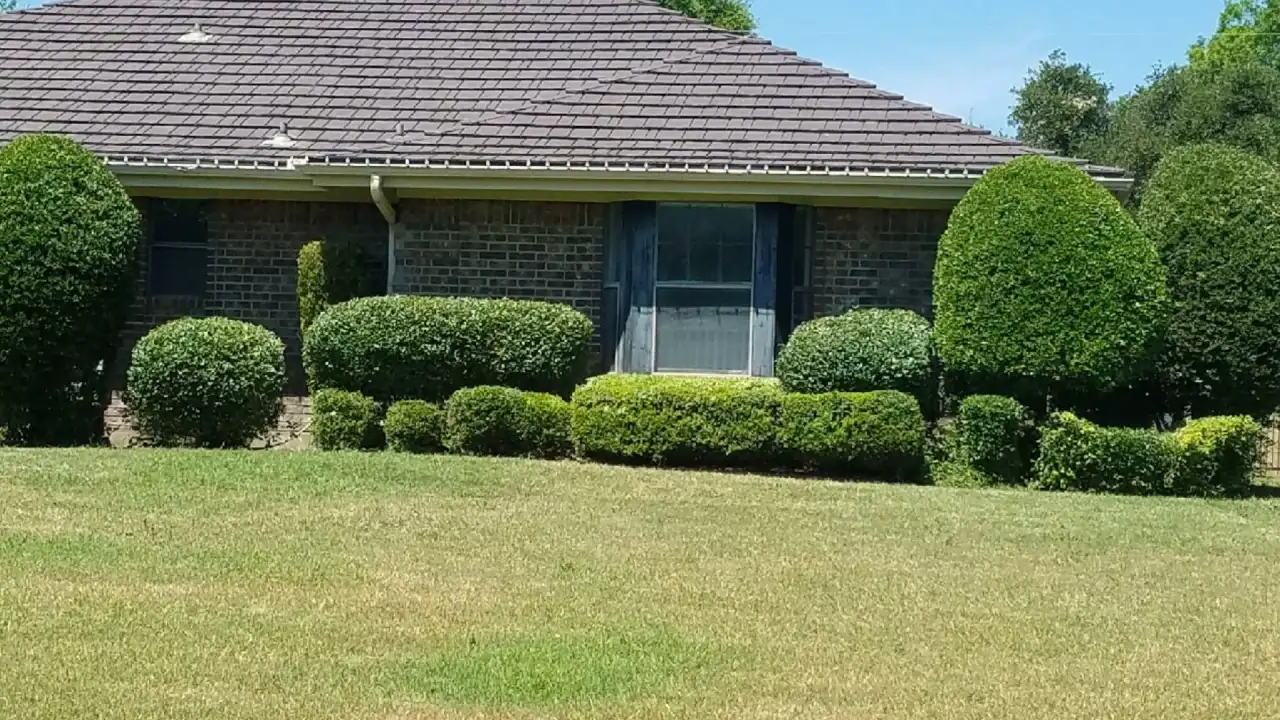
The fall pre-emergent window in the Fort Worth area opens in mid to late August and runs through mid September. Applied correctly, it prevents poa annua, henbit, chickweed, rescue grass, and other cool-season weeds that would otherwise emerge through fall and winter. July is when smart homeowners and lawn care services plan their fall pre-emergent strategy, source product, and book applications.
What Fall Pre-Emergent Actually Prevents
If your Fort Worth lawn has been overrun by poa annua in winter or had henbit purple patches in early spring, those problems were decided last August. The pre-emergent application that prevents fall weeds in North Texas goes down in late summer, not in fall when the weeds are visible.
Poa Annua
Annual bluegrass that invades lawns through the cool months and creates unsightly patches across Bermuda and St. Augustine turf.
Henbit & Chickweed
Cool-season broadleaf weeds that produce purple patches in early spring and take hold when no pre-emergent barrier is in place.
Rescue Grass & Ryegrass
Volunteer grasses and winter broadleaf weeds that germinate when soil temperatures drop below 70 degrees in late August or early September.
The Right Timing Window
The trigger we watch is soil temperature, not calendar date. Soil thermometers at four-inch depth showing consistent readings in the upper 70s indicate the right window is approaching.
Mid August
The optimal window opens. Primary application timing for most Fort Worth area properties with weed history.
Late August – Early September
The peak window. Soil temps drop into the lower 70s. Applications should be down within a few weeks of this point.
Mid September
The window closes. Applications after this date miss early-germinating weeds already established in the soil.
Product Choices for North Texas Lawns
Several pre-emergent active ingredients work for fall application in our area. The right choice depends on your grass type and specific weed pressure history.
Prodiamine
One of the longer-lasting options. Provides 4 to 6 months of protection at the right rate. Safe for Bermuda at labeled rates.
Pendimethalin
Common choice with slightly shorter residual but excellent performance on specific weed species. Safe for Bermuda lawns.
Indaziflam
Particularly effective on poa annua and resistant strains. A strong option for properties with chronic annual bluegrass history.
St. Augustine Note
St. Augustine is more sensitive to some active ingredients. The choice of product is narrower and matters more for this grass type.
The Split Application Strategy
One of the most effective fall pre-emergent strategies for North Texas is a split application: a primary application in mid to late August at labeled rate, followed by a lighter follow-up application six to eight weeks later. The split extends protection through the full fall and winter germination period, when a single application might break down before late-germinating weeds emerge.
Heavy Weed Pressure Properties
Properties with heavy poa annua history benefit most from the split application. Two applications provide overlapping protection through the full germination season.
Lighter Pressure Properties
Properties with lighter weed pressure may do well with a single application timed in the peak window. Discuss your property history with your lawn care service.
Mistakes to Avoid
Applying Too Early
Pre-emergent applied in July typically degrades before the fall germination window opens. The protection is gone exactly when it is needed.
Applying Too Late
Pre-emergent applied after weeds have already germinated does not affect those weeds. Pre-emergent does not kill what is already growing.
Underdosing
Applying below the labeled rate to save money produces gaps in the protective barrier. The savings are wiped out by the weeds that emerge through the gaps.
Skipping the Watering
Pre-emergent needs to be activated by water within a few days of application. A dry pre-emergent on top of dry soil produces minimal protection.
Disturbing the Barrier
Aeration, dethatching, or heavy mechanical work after pre-emergent application breaks the protective barrier. Schedule mechanical work before pre-emergent or wait until next season.
How Pre-Emergent Fits With Other Fall Work
Fall is a busy season for lawn work in our area. Aeration, overseeding, fertilization, and pre-emergent all happen in roughly the same window. Coordinating them matters.
Bermuda Lawns
Aeration happens before pre-emergent so the barrier is not disrupted. Pre-emergent can be combined with fall fertilization or applied as a separate visit.
Overseeded Lawns
For lawns being overseeded with winter ryegrass, pre-emergent timing is more complex. The same products that prevent weed seeds also prevent ryegrass establishment. A different strategy is needed.
Spot Weed Control
Spot weed control for any weeds already established needs to happen before pre-emergent goes down. Each piece of the fall program coordinates with the others.
Frequently Asked Questions
When exactly should I apply?
Mid August through mid September for our area, with the optimal window typically in the last week of August or first week of September depending on weather.
Can I apply it myself?
Yes, but rate calculation and uniform application matter. A spreader calibrated incorrectly can apply too little (no protection) or too much (turf damage). Professional application has tighter rate control.
Should I combine with fall fertilizer?
Combination products exist but the timing is sometimes a compromise. Separate applications often produce better results for both pre-emergent protection and fertilization.
How Buffalo Outdoor Approaches Fall Pre-Emergent
Our standard fall pre-emergent program in Tarrant County uses the split application strategy on properties with weed history and single applications on properties with cleaner lawns. The product choice depends on the specific weed pressure history. Properties with chronic poa annua get different active ingredients than properties dealing primarily with henbit or chickweed.
The timing happens by zone across our service area. The west side of the metro (Aledo, parts of Fort Worth) typically gets applied a few days before the east side because soil temperatures drop slightly faster there. We start booking the schedule in early August.
We serve homeowners across Keller, Aledo, Saginaw, Benbrook, Fort Worth, Southlake, Roanoke, Trophy Club, North Richland Hills, and communities throughout the area. As the fastest growing and highest rated outdoor services company in Tarrant County — with Best of Fort Worth awards in 2022, 2024, and 2025 and Inc. 5000 recognition in 2023 — we bring expertise and accountability backed by a 100% satisfaction guarantee.
Plan Your Fall Pre-Emergent Strategy Now
The properties that get the cleanest fall lawns made their decisions in July. Book your application slot now before the August window fills. Call us at (817) 799-6823 or request your quote online.