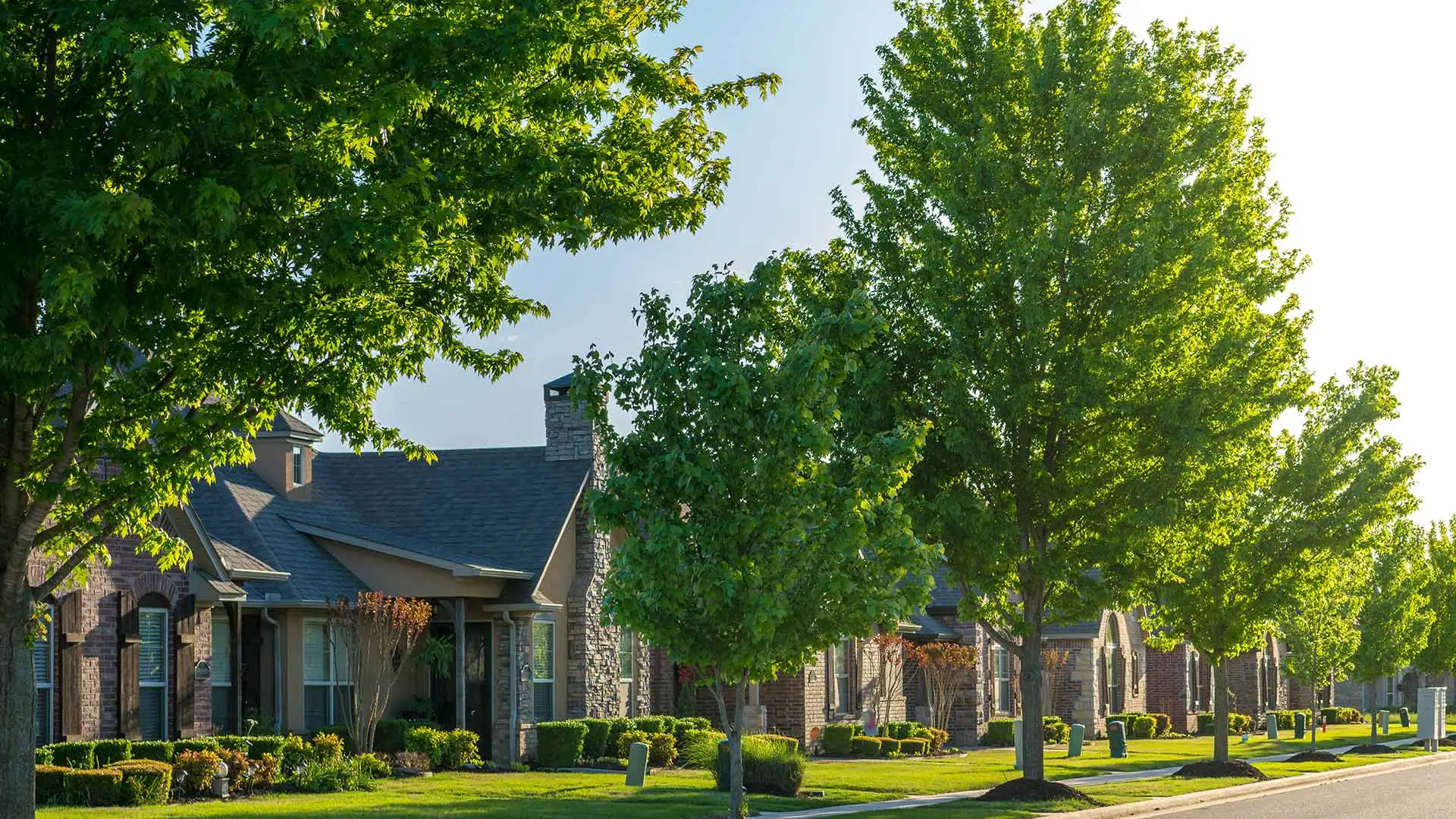
Tree Stress Signs in Fort Worth Summer
6 Things That Mean Your Mature Trees Need Attention Now
Buffalo Outdoor • July 2026 • Fort Worth, TX
Mature trees in the Fort Worth area show six recognizable signs of summer stress that often go unnoticed until significant damage has occurred. Catching these signs in July allows for intervention while the tree can still recover. Waiting until visible decline often means losing the tree.
Why July Is the Critical Month
If you have mature trees on your Fort Worth property, July is the month when the summer stress signs start showing. Mature trees can hide problems for a long time because they have stored energy reserves that mask early decline. By the time the damage is obvious, the underlying issue has often been present for months or years.
The 6 Signs Your Mature Trees Are in Trouble
Sign 1: Yellowing or Browning of Inner Leaves
When inner leaves yellow and drop while outer leaves remain green, the tree is conserving resources by shedding less-productive tissue. This sign in July across multiple branches is a warning — it usually indicates root stress, soil compaction, or watering issues. Trees in lawns with heavy spring fertilization often show this pattern because early canopy growth outpaced what roots can sustain through summer.
Sign 2: Premature Leaf Drop
Significant leaf drop in July or August — volumes that look like early fall — signals acute stress or chronic decline. Drought stress is the most common cause in our area. Root damage from construction and vascular diseases like Verticillium wilt are also major contributors. Drought-dropped leaves often dry and curl before falling; disease-dropped leaves may show discoloration or spots.
Sign 3: Bark Cracks and Weeping Sap
Vertical cracks on the south or southwest sides of trunks often indicate sun scald or extreme temperature damage. Weeping sap from cracks is more serious — it can indicate borer activity, bacterial infection, or fungal damage. Dark, smelly sap usually indicates bacterial wetwood. Foamy sap suggests bacterial activity. Clear sap can be normal for some species.
Sign 4: Dead Branch Tips
Dieback — the outer ends of branches dying while inner growth remains alive — usually starts at the top of the canopy and progresses inward and downward. It indicates the tree cannot supply nutrients and water to its outer extremities. Catching early dieback when only a few terminal branches are affected gives the tree a real chance. Waiting until 30–50% of the canopy is affected usually means decisions about removal.
Sign 5: Fungal Growth at the Base
Mushrooms or shelf fungus at the base, on exposed roots, or on the lower trunk almost always indicate advanced root or trunk decay. By the time fruiting bodies are visible, internal damage is significant. Armillaria root rot, Ganoderma, and Phaeolus all indicate serious structural decay. Trees with visible base fungi should be evaluated for structural risk — a decayed root or trunk system can fail in a windstorm with little warning.
Sign 6: Visible Insect Activity
Warning signs include round exit holes in bark (borers), sawdust-like frass at the base, webbing in branch crotches, and dense clusters of feeding insects. Borers are the most damaging — they tunnel through vascular tissue and can kill mature trees within a year or two. Emerald ash borer has significantly affected ash trees across North Texas. Early intervention sometimes saves the tree; late detection rarely does.
What Causes These Signs on North Texas Trees
Drought & Inadequate Watering
Insufficient deep watering during establishment and dry summer stretches is the leading cause of stress in Fort Worth mature trees.
Soil Compaction
Construction, paving, or heavy foot traffic over root zones deprives roots of oxygen and water penetration, weakening trees over time.
Improper Pruning
Removing too much canopy or creating improper cuts opens entry points for disease and removes the tree's ability to produce energy.
Shallow Lawn Watering & Salt Damage
Irrigation systems set for lawns provide shallow cycles that don't reach deep tree roots. Salt from de-icing or fertilizer over-application adds further damage.
Frequently Asked Questions About Tree Stress in Fort Worth
How much water do mature trees need in summer?
About 10 gallons per inch of trunk diameter per week during dry stretches. A 12-inch diameter tree needs roughly 120 gallons of deep watering per week. Apply at the drip line, not at the trunk.
Should I prune stressed trees in summer?
Generally no. Summer pruning compounds stress. Wait for fall or winter unless removal of dead or hazardous limbs is immediately necessary.
Can I fertilize a stressed tree to help it recover?
Usually no. Fertilizer on a stressed tree often makes things worse by pushing growth the roots cannot support. Address watering, mulching, and soil compaction first.
What is the most underrated thing I can do for mature trees?
Mulching properly. A 3 to 4 inch layer of mulch extending to the drip line, kept away from the trunk, addresses soil temperature, moisture retention, and root protection all at once.
When should I call a certified arborist?
For any visible stress signs, especially in trees you value. The cost of a consultation is far less than the cost of losing a mature tree.
What We Recommend If You See Multiple Signs
Trees showing two or more signs from this list should be evaluated by a certified arborist. The combination of stress factors usually indicates serious underlying issues that benefit from professional assessment.
Root Zone Evaluation
Assessing compaction, damage, and soil health around the entire root zone.
Soil Testing
Understanding nutrient levels, pH, and compaction to inform the right treatment plan.
Trunk & Bark Inspection
Identifying cracks, weeping sap, insect entry points, and structural concerns.
Canopy Assessment
Evaluating dieback, density, and overall canopy health to determine next steps.
How Buffalo Outdoor Handles Tree Care
Tree work is one of the areas where our crews' depth of experience makes a real difference. We have ISA-certified arborists who walk properties and assess trees in context — not in isolation. The right recommendation for a mature live oak in Aledo is different from the right recommendation for a young Bradford pear in a Keller neighborhood. Cookie-cutter tree advice usually fails.
Health Assessments
Comprehensive evaluation by ISA-certified arborists who assess your specific trees in their environment.
Deep Watering Programs
Customized deep watering programs designed for mature specimens, not standard lawn irrigation cycles.
Structural Pruning
Timed to the right season to minimize stress and promote long-term structure and health.
Targeted Borer Treatment
Early intervention treatments for emerald ash borer, bronze birch borer, and wood-boring beetles affecting oaks and other species.
Act This Week — Early Intervention Saves Trees
If you have noticed any of the signs above on trees you value, schedule a walk-through with a certified arborist this week or next. Mature trees decline over months and years, but interventions that work get smaller and cheaper the earlier they happen. The 30-minute consultation often saves a tree that would otherwise need replacement at multiple times the cost.
As the fastest growing and highest rated outdoor services company in Tarrant County — Best of Fort Worth 2022, 2024, and 2025; Inc. 5000 recognized in 2023 — we serve homeowners across Keller, Aledo, Saginaw, Benbrook, Fort Worth, Southlake, Roanoke, Trophy Club, North Richland Hills, and communities throughout the area. 100% satisfaction guarantee: if we cannot make it right, you pay nothing.