Skip to content

Christmas Light Installation

What Happens on Install Day: How Our Crew Hangs Christmas Lights on Fort Worth Homes

Buffalo Outdoor • November 2026 • Fort Worth, TX • 7 min read
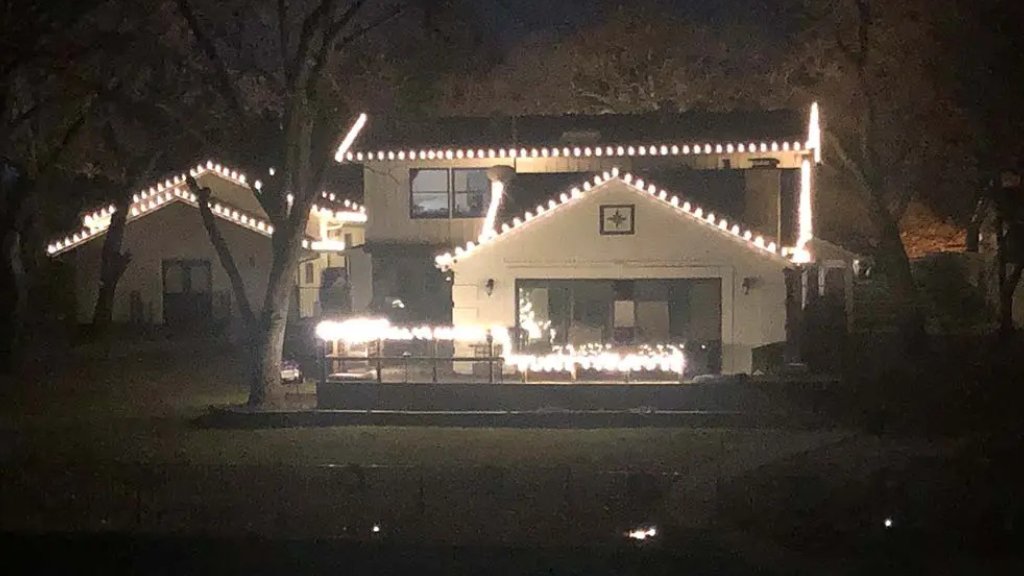
Warm white Christmas lights along the rooflines and back deck of a home viewed across the lawn near Fort Worth, TX

Short Answer: On install day, our crew arrives with the lights already planned for your house. They check power and outlets first, set ladders on firm footing, and clip lights along gutters and roof edges, keeping lines straight and evenly spaced and every peak centered. Wiring is tucked out of sight, decks, trees, and beds are lit as planned, every section is tested, and a timer is set before the crew leaves. Most homeowners do not need to be home, as long as the crew can reach an outdoor outlet and access gates.

If you have never had Christmas lights professionally installed, you might wonder what actually happens when the crew pulls up. How long does it take? Do you need to be home? What does the crew need from you?

The home pictured here, with warm white along the rooflines and the back deck, shows the kind of finished result install day is working toward. Here is a walk through a typical install day.

Before the Crew Arrives

Most of the work behind a good install happens before install day. The roofline is measured, the design is planned, and the lights are counted so each run fits the house. That planning is what lets the crew land a bulb on every corner and center one on every peak.

Checking Power First

The first thing the crew does on site is check power. They confirm which outdoor outlets will run the display, make sure they work, and plan where the main lead will run. Outdoor lights belong on outlets with ground fault protection.

Setting Ladders Safely

Next, ladders go up. Ladders need firm, level footing, which takes care on sloped yards, flower beds, decks, and soft ground after rain. The crew places each ladder to reach a section safely and moves it as they work.

Clipping Along Gutters and Roof Edges

Most roofline lights are attached with clips that grip the gutter lip or the shingle edge. Each bulb sits in its own clip, which keeps it upright and evenly spaced. Clips hold lights securely without nails, screws, or staples.

Keeping Lines Straight

Straight lines are what separate a professional display from a rushed one. The crew keeps bulbs evenly spaced and lines tight along the edge.

Corners and Peaks

A run that starts with a bulb on a corner should end with a bulb on a corner, and the top of every gable should have a bulb at the peak.

Back Rooflines and Decks

If your design includes the back of the house, the crew lights back rooflines, deck railings, and patio structures after the front. On homes with raised decks or sloped back yards, ladder placement takes extra care.

Trees, Columns, and Beds

Trees are wrapped from the trunk up, columns are wrapped evenly top to bottom, and bed lights go where they will not be stepped on or hit by mowers.

Hiding the Wiring

The crew routes wires along trim, behind downspouts, and through beds so they are out of sight from the street and the patio.

Testing Every Section

Before anyone leaves, every section is tested. The crew turns the display on, checks for dark bulbs or loose connections, and fixes anything that is not lighting correctly.

Setting the Timer

The last step is the timer. It turns the lights on at dusk and off at a set time each night.

How Long It Takes

A simple single-story roofline can go up in a short visit. Larger two-story homes with several gables, back decks, and trees take longer. The first year usually takes the longest.

Gutter Guards

Many homes have gutter guards, which can change how clips attach. The crew checks gutter guard style before clipping so lines stay straight and guards are not damaged.

Do You Need to Be Home?

Most homeowners do not need to be home, as long as the crew can reach a working outdoor outlet and get into the backyard if needed. If the outlet or backyard is behind a locked gate, let us know how the crew can get in.

What You Can Do Ahead of Time

Move cars out of the driveway if ladders need to go there. Unlock side gates. Keep pets inside. Clear patio furniture from areas the crew needs to reach. And let us know about anything new, like a fresh bed or a sprinkler head near the house.

Pets and Kids

Keeping dogs inside and kids clear of the work area keeps everyone safe while ladders and cords are around the house.

Weather Days

If wind, rain, or ice moves in on your scheduled day, the crew will reschedule rather than work on a wet or icy roof. That is the right call for the crew and for your home.

Cold Mornings

Late fall mornings in Fort Worth can be chilly and damp with dew. Crews often wait for roofs to dry before climbing, which can shift start times a little on cold mornings.

Protecting the Lawn and Beds

As an outdoor services company, we pay attention to what is under the ladders. The crew works around beds, steps carefully around shrubs, and avoids dragging equipment across the lawn.

Gutters Full of Leaves

Gutters packed with fall leaves make clipping harder. If your gutters are full, mention it, since cleaning them first helps.

Larger Properties

On larger lots in Aledo and Keller, outlets may be far from the parts of the house you want lit. Longer runs back to power take more planning, and the crew routes them so they stay hidden and out of mowing paths.

Stone, Brick, and Siding

Different exteriors call for different attachment methods. Lights on brick or stone around windows or entries use clips or mounts designed for masonry, not drills or nails.

Lakefront and Backyard Features

On lakefront homes or homes with large backyards, docks, pergolas, and patios are often part of the design. Those features take extra time and care, especially near water.

Sprinklers

Sprinklers running on fresh connections can trip outlets. If your irrigation runs in the evening, consider adjusting it during the season.

Two-Story Homes

On two-story homes, the upper rooflines take the most time and care. Taller ladders, careful placement, and attention to footing are part of every two-story install.

Communication on Install Day

Many homeowners like a heads-up when the crew is on the way and a quick note when the job is done. If you have a preference, or someone else should get the call, let us know when you book.

Wreaths and Garland

If your design includes wreaths or garland, they go up during the same visit, usually after the roofline and before testing.

Questions Worth Asking

Before install day, ask what time the crew will arrive, which outlet will run the display, whether you need to be home, and what happens if weather pushes the date.

After Install Day

Once the lights are up, the timer runs the show. If a bulb or section goes out during the season, call and the crew can come back to fix it.

What a Good Install Day Looks Like

Imagine this. You leave for work with a dark house. That evening, the front roofline is glowing, the back deck railing is lit, every line is straight, every peak is centered, and there is not a wire in sight. The timer already knows when to turn it all off.

What to Do Next

Before install day, clear the driveway, unlock gates, keep pets inside, move patio furniture from work areas, and make sure the crew can reach a working outdoor outlet. Let us know about new beds, sprinkler heads, or anything else the crew should plan around.

If you would rather have someone else handle the ladders and the design this year, we are here for that. Buffalo Outdoor installs Christmas lights in Fort Worth, Keller, Aledo, Benbrook, and the surrounding area. Call 817-799-6823 or visit buffalooutdoor.com to request a free quote.

Here is what to expect. We will look at your home with you, talk through the rooflines, trees, and features you want lit, and explain what the installation would include before anything goes up. You will know what you are getting and when.
Keep reading

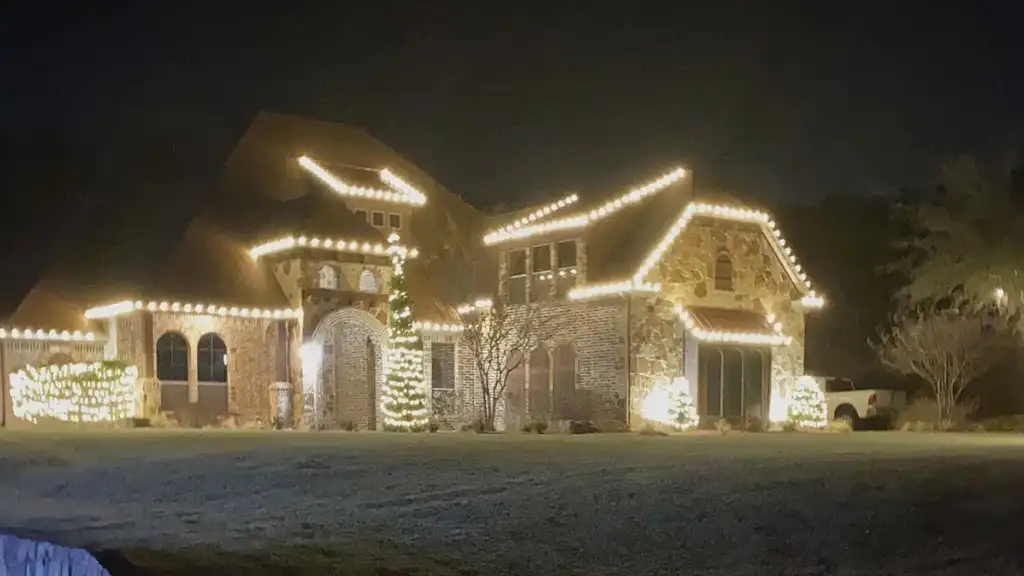
Warm white Christmas lights outlining the rooflines of a stone and brick home with lit shrubs and a wrapped tree on a frosty night
Christmas Light InstallationWhy Warm White Is a Favorite on Fort Worth Stone and Brick HomesShort Answer: Warm white is one of the most popular Christmas light choices on Fort Worth homes, and stone and brick are a big reason why. The soft, golden glow brings out the warm tones of Austin stone, limestone, and red or tan brick, traces the shape of the house without competing with its archit2026-11-01 · 7 min readRead the article →
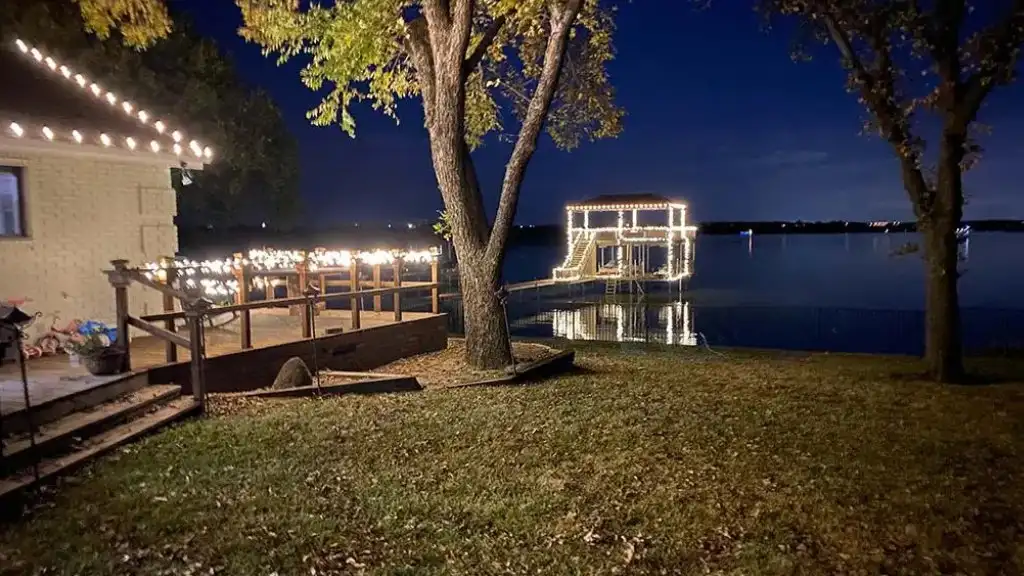
Warm white Christmas lights on a lakefront home's roofline, deck railing, and boat dock reflecting on the water near Fort Worth, TX
Christmas Light InstallationAfter the Holidays: Christmas Light Takedown and Storage for Fort Worth HomesShort Answer: Christmas light takedown matters almost as much as installation. In Fort Worth, most displays come down in early to mid January. Careful takedown releases clips by hand to protect shingles and gutters, unwraps trees without scraping bark, removes lights from docks and decks with care a2026-11-01 · 7 min readRead the article →
Buffalo Outdoor technician applying a liquid lawn treatment to a dormant Bermuda lawn in a Fort Worth, TX backyard
FertilizationWhy Your Fort Worth Lawn Turns Brown Every Winter, and What Fall Fertilization Can and Cannot DoShort Answer: If your Fort Worth lawn turns tan after the first hard freeze, that is normal. Bermuda, St. Augustine, and Zoysia are warm-season grasses that go dormant in winter, and no fertilizer will keep them green through January. What fall fertilization does is help the grass store energy in it2026-10-01 · 7 min readRead the article →
Buffalo Outdoor crew loading fall oak leaves into a debris truck during a fall cleanup in Fort Worth, TX
Fall CleanupHow Many Fall Cleanups Does a Fort Worth Yard Need? Timing Leaf Removal Around Our TreesShort Answer: Most Fort Worth yards with a few mature trees do best with two fall cleanups, and heavily wooded lots often need three. Our most common shade trees, including post oaks, red oaks, cedar elms, and pecans, drop most of their leaves from mid November into December, while live oaks shed ma2026-10-01 · 7 min readRead the article →
Buffalo Outdoor crew member using a leaf vacuum to clear fall leaves from a backyard lawn in Fort Worth, TX
Fall CleanupWhat Happens During a Professional Fall Cleanup, From the First Leaf to the Final Haul-OffShort Answer: A professional fall cleanup in Fort Worth usually follows the same order: a walk-through, clearing leaves out of beds and tight corners, gathering leaves off the lawn with blowers and leaf vacuums, cleaning patios and hard surfaces, a final mow or tidy pass, and loading everything into2026-10-01 · 7 min readRead the article →
Buffalo Outdoor crew loading fall oak leaves into a debris truck during a fall cleanup in Fort Worth, TX
Fall CleanupFall Bed Cleanup and Fresh Mulch: Getting Fort Worth Landscape Beds Ready for WinterShort Answer: Fall is one of the best times to clean up and mulch landscape beds in Fort Worth. Clearing out spent annuals, cutting back finished perennials, pulling weeds, and removing leaf buildup gets beds ready for winter. A fresh two to three inch layer of mulch then insulates roots against our2026-10-01 · 7 min readRead the article →
Buffalo Outdoor technician treating brick weep holes to keep pests out of a Fort Worth, TX home
Pest ControlWeep Holes, Eaves, and Cracks: Where Fall Pests Get Into Fort Worth Brick HomesShort Answer: Most brick homes around Fort Worth have weep holes, small gaps in the bottom row of brick that let moisture drain out of the wall. They are necessary, but they also give crickets, spiders, scorpions, roaches, and ants an open path into the wall cavity, especially as pests look for shel2026-10-01 · 7 min readRead the article →
Buffalo Outdoor technician removing spider webs from a covered patio with an extension pole in Fort Worth, TX
Pest ControlSpiders, Crickets, and Scorpions: What Fall Pest Control Looks Like in Fort WorthShort Answer: Fall around Fort Worth brings a predictable wave of pests: crickets move toward homes and lights, spiders build webs under eaves and patios to catch them, and scorpions hunt both while looking for sheltered spots for winter. Because these pests feed on each other, controlling one usual2026-10-01 · 7 min readRead the article →
Bermuda vs. St. Augustine: How Fall Fertilization Differs for Fort Worth's Two Most Common Lawns
FertilizationBermuda vs. St. Augustine: How Fall Fertilization Differs for Fort Worth's Two Most Common LawnsShort Answer: Bermuda and St. Augustine both benefit from fall feeding in Fort Worth, but they need different handling. Bermuda is a heavy feeder that grows in full sun and tolerates a moderate nitrogen feeding in September and early October. St. Augustine grows in shade, is prone to large patch fun2026-10-01 · 7 min readRead the article →
Buffalo Outdoor technician spraying a liquid treatment across a dormant lawn in Fort Worth, TX
FertilizationFall Fertilization and Pre-Emergent in Fort Worth: How October Sets Up Next Spring's LawnShort Answer: In Fort Worth, October is when two things happen at once. Bermuda, St. Augustine, and Zoysia lawns are storing energy in their roots before winter dormancy, and winter weeds like henbit, chickweed, and annual bluegrass (poa annua) are starting to sprout. A fall feeding with modest nitr2026-10-01 · 7 min readRead the article →
A branded Buffalo Outdoor service truck and technician at a property in Fort Worth, Texas
LandscapingWhat Landscape Maintenance Actually Includes in Fort WorthWhat a landscape maintenance program in Fort Worth actually covers, what is billed separately, and the questions that make two similar looking quotes comparable.2026-09-23 · 7 min readRead the article →
A stone home in the Fort Worth area with a broad sloping lawn and mature trees
LandscapingFixing Yard Drainage Before North Texas Winter RainNorth Texas clay sheds water rather than absorbing it. How to read where your Fort Worth yard drains badly, which fixes are cheap, and why fall is the season to do it.2026-09-23 · 7 min readRead the article →
Mature trees and maintained landscape beds along a residential street in Fort Worth, Texas
LandscapingMulch in Fall: Why the Timing Matters in North TexasMulch does more in a North Texas fall than it does in spring. Why the timing matters, how deep it should actually be, and the volcano mistake that kills trees slowly.2026-09-16 · 7 min readRead the article →
A tree-lined residential street in the Fort Worth area with mature shade trees over well maintained front lawns
LandscapingFall Tree Planting in Fort Worth: What to Plant and WhereFall is the right season to plant a shade tree in Fort Worth. Which species handle our clay and heat, where to place them, and the planting mistakes that kill trees slowly.2026-09-16 · 7 min readRead the article →
A Buffalo Outdoor crew member mowing a lawn beside a driveway in the Fort Worth area
LandscapingOverseeding with Ryegrass in Fort Worth: Worth It or Not?Overseeding dormant Bermuda with winter ryegrass gives a green Fort Worth lawn from November to March. What it actually costs your Bermuda in spring, and who it suits.2026-09-09 · 8 min readRead the article →
A large stone home in the Fort Worth area with an expansive, freshly maintained lawn and mature shade trees
LandscapingWhat Landscape Design and Installation Costs in Fort WorthWhat landscape design and installation costs around Fort Worth, how the number is built, where budgets go further than expected, and how to compare estimates fairly.2026-09-09 · 7 min readRead the article →
Mature shade trees over front lawns on a residential street in the Fort Worth area
LandscapingLandscape Lighting: Why Fall Is the Season to Add ItLandscape lighting adds usable evening hours and real security. Why fall is the right season to install it in Fort Worth, what it costs, and the design mistakes to avoid.2026-09-02 · 7 min readRead the article →
Close view of a brown damaged patch surrounded by healthy green turf on a Fort Worth lawn
LandscapingFall Armyworms in Fort Worth LawnsFall armyworms can strip a Fort Worth lawn in two days. What the damage looks like, the soap flush that confirms them, and why speed matters more than product choice.2026-09-02 · 8 min readRead the article →
Why Fall Fertilization Still Matters for North Texas Lawns
Lawn FertilizationWhy Fall Fertilization Still Matters for North Texas LawnsWhy a fall feeding is important for warm-season North Texas lawns even as they head toward dormancy, what it does for roots and spring green-up, and how to time it.2026-09-01 · 7 min readRead the article →
The Fall Winterizer Feeding: Preparing Your Lawn for Dormancy
Lawn FertilizationThe Fall Winterizer Feeding: Preparing Your Lawn for DormancyWhat a winterizer feeding is, why it matters for warm-season North Texas lawns heading into dormancy, and how potassium builds the cold hardiness your lawn needs.2026-09-01 · 7 min readRead the article →
Feeding Bermuda, St. Augustine, and Zoysia Before Winter
Lawn FertilizationFeeding Bermuda, St. Augustine, and Zoysia Before WinterHow fall feeding works for the warm-season grasses common in North Texas, why each benefits from a fall winterizer, and how to prepare your lawn for dormancy.2026-09-01 · 7 min readRead the article →
Fall Fertilization Mistakes North Texas Homeowners Make
Lawn FertilizationFall Fertilization Mistakes North Texas Homeowners MakeThe most common fall fertilization mistakes on warm-season North Texas lawns, from wrong timing to too much nitrogen, and how to feed your lawn correctly before winter.2026-09-01 · 7 min readRead the article →
Why a Fall Cleanup Is About More Than Curb Appeal
Fall CleanupsWhy a Fall Cleanup Is About More Than Curb AppealWhy a fall cleanup matters for the health of your North Texas lawn, not just its looks, from preventing smothered grass to reducing winter disease and pests.2026-09-01 · 7 min readRead the article →
What Happens If You Leave the Leaves on Your Lawn
Fall CleanupsWhat Happens If You Leave the Leaves on Your LawnWhat really happens to a North Texas lawn left covered in fallen leaves through winter, from smothered grass to disease and pests, and why timely leaf removal matters.2026-09-01 · 7 min readRead the article →
Get Lawn & Landscape Service.
Request your free quote today.
GET A QUOTE
© 2026 Buffalo Outdoor  |  All Rights Reserved  |  Privacy Policy  |  Your Privacy Choices  |  Terms of Use
Buffalo Outdoor awards: Inc. 5000 2023, Expertise.com Best Landscaping Services in Fort Worth 2021, and Fort Worth Magazine Best of Fort Worth 2022, 2024, 2025 and 2026