Landscaping
Overseeding with Ryegrass in Fort Worth: Worth It or Not?
Buffalo Outdoor • September 2026 • Fort Worth, TX • 8 min read
Short Answer: Overseeding dormant Bermuda with annual ryegrass genuinely works and gives you a green lawn from roughly November through March instead of a tan one. The costs are real and mostly arrive in spring: the ryegrass competes with your Bermuda during green up, delaying and weakening recovery. It also needs mowing all winter, requires its own watering to establish, and rules out fall pre-emergent on that area. It suits a strong, established Bermuda lawn where winter appearance genuinely matters. It does not suit a lawn that is already thin.
Every autumn we get asked whether it is worth putting ryegrass down so the lawn stays green through winter. It is a fair question with a genuine trade off on both sides, and the honest answer depends on the condition of your Bermuda rather than on how much you dislike a tan lawn.
Here is the whole picture so you can decide.
What It Actually Is
Bermuda and zoysia are warm season grasses that go fully dormant here, turning tan from roughly late November into April. That is normal and healthy, and the plant is alive underneath.
Annual ryegrass is a cool season grass that germinates quickly, grows through the cool months, and dies out when heat arrives. Broadcast over dormant Bermuda in autumn, it fills the gap with green while the Bermuda sleeps.
It is genuinely temporary by design. The ryegrass is not meant to persist, and it will not survive a North Texas summer regardless of what you do.
Timing matters. It goes down as the Bermuda is going dormant and soil temperatures are falling, generally around mid October in our area. Too early and it competes with Bermuda that is still growing. Too late and it does not establish before the cold.
The Case For It
The obvious benefit is appearance, and for some properties that is not trivial.
A green lawn from November through March genuinely changes how a house looks for a third of the year. On a property being sold, on a corner lot with high visibility, or on a commercial frontage, that can be worth real money.
There is a practical benefit as well. A dormant Bermuda lawn takes traffic poorly because it cannot repair itself until spring, so a path worn across it in January is still there in April. Ryegrass is actively growing through those months and does repair, which matters on a yard that gets used by children or dogs through winter.
Ryegrass also provides some erosion protection on slopes over the wet months, since actively growing roots hold soil better than dormant ones.
The Case Against It
The costs are real and they mostly arrive in spring, which is why people who do it once sometimes do not repeat it.
The main one is competition at green up. Bermuda comes out of dormancy by spreading into available light and space, and ryegrass is still growing vigorously at exactly that moment. It shades the Bermuda and slows recovery. On a healthy lawn that is a mild setback. On a thin lawn, it is the difference between recovering and not.
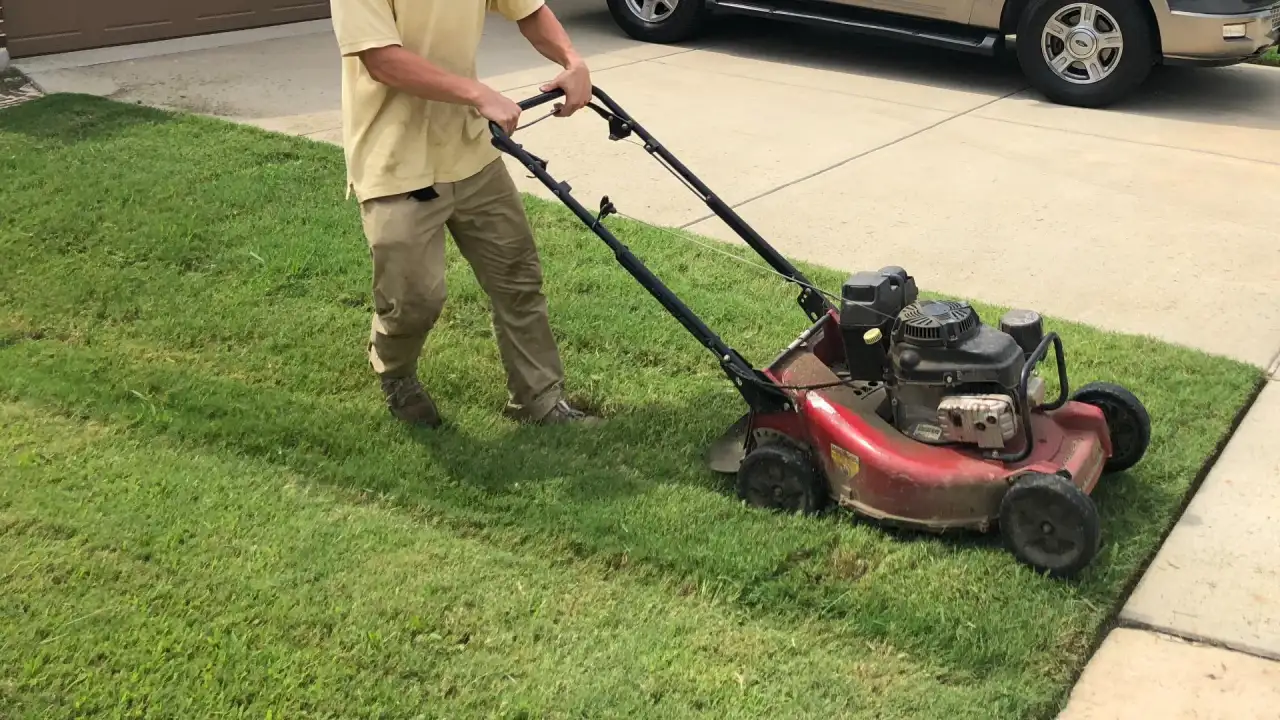
Then there is mowing. A ryegrass lawn needs cutting through the winter, which surprises people who expected a dormant season off. If your mowing service pauses in December, you have created a job for yourself.
Water is the third. Ryegrass has to be kept damp to germinate and needs watering through establishment, at a time of year when you would otherwise be dialing irrigation back.
And the fourth is the one people do not anticipate: you cannot apply fall pre-emergent to an overseeded area, because it prevents the ryegrass from germinating just as effectively as it prevents poa annua. So you trade winter weed prevention for winter color, and next spring you deal with the henbit you would otherwise have stopped.
Who It Suits
Our general guidance is fairly simple.
It suits a thick, well established Bermuda lawn on a property where winter appearance genuinely matters, and where somebody will keep mowing through the cool months. A strong lawn absorbs the spring competition without lasting harm.
It does not suit a lawn that is already thin, patchy, or recovering from a hard summer. That lawn needs every advantage it can get at spring green up, and ryegrass takes some of them away.
It also does not suit St. Augustine, which does not go as fully dormant and handles the competition worse than Bermuda does.
And it is a poor fit for anyone whose main goal is a better lawn next summer, because the honest answer there is that the money is better spent on soil work, weed prevention, and getting the Bermuda thicker.
Doing It Properly If You Do It
If you decide to go ahead, a few details separate a good result from a patchy one.
Mow the Bermuda short before seeding and remove the clippings, so seed reaches soil rather than sitting on top of the canopy. Perennial ryegrass gives a finer texture and better color than annual ryegrass and costs more; annual is cheaper and coarser.
Seed at a rate appropriate for overseeding rather than for establishing a new lawn, and water lightly and frequently until it germinates, then taper.
In spring, the transition is the part that needs managing. Mowing the ryegrass short as temperatures rise helps the Bermuda take back over, and there are products that assist the transition on a lawn where the ryegrass is holding on too long.
Do not fertilize heavily in spring while both are present, since you would mostly be feeding the ryegrass at the Bermuda's expense.
The Alternative Worth Considering
If the real objection is that a tan lawn looks neglected, there is another route.
A dormant Bermuda lawn that is dense, evenly colored, and free of winter weeds looks deliberate. A dormant lawn shot through with green poa annua and purple henbit looks abandoned. The difference between those two is fall pre-emergent, not ryegrass.
Most of the winter lawns people find unattractive around Fort Worth are unattractive because of what is growing in them rather than because the Bermuda is tan. Uniform tan reads as seasonal. Patchy tan reads as neglect.
That is worth weighing, because prevention costs less than overseeding and does not carry a spring penalty.
What It Costs
Worth putting numbers to, since the decision is partly financial.
Ryegrass seed for overseeding a typical Fort Worth residential lawn generally runs a few hundred dollars in material depending on lot size and whether you choose annual or perennial ryegrass. Professional overseeding including preparation and application commonly lands in the $300 to $700 range on a typical lot.
The costs that follow are the ones people forget to add. Mowing continues through the winter rather than pausing, so if you use a service that is additional visits. Water use rises during establishment at a time you would normally be reducing it. And the fall pre-emergent you skip has a spring cost in post emergent weed control instead.
Put together, overseeding is not a large expense on its own and it is not the cheap option either, and it repeats annually since the ryegrass dies out every summer.
That recurring nature is worth weighing. Money spent once on soil work and getting Bermuda thicker compounds. Money spent annually on ryegrass does not.
Managing the Spring Transition
If you do overseed, the spring handover is the part that determines whether the Bermuda comes back well, and it is the step most homeowners skip entirely.
The goal is to weaken the ryegrass deliberately as temperatures rise so the Bermuda gets light and space at the moment it wants them. Left alone, the ryegrass keeps growing well into a warm North Texas spring and holds the Bermuda down.
Mowing lower as spring arrives is the simplest lever. Dropping the height stresses the ryegrass and exposes the Bermuda underneath to sunlight, which is what triggers it to spread.
Withholding nitrogen early is the second. Feeding in March mostly feeds the ryegrass, so hold the first significant feeding until the Bermuda is genuinely greening up and taking over.
Where the ryegrass is holding on stubbornly into a warm spring, there are transition products that remove it selectively, and on a lawn that matters that is worth doing rather than waiting for summer heat to sort it out.
What to Do Next
Look at your Bermuda honestly right now, while it is still green. If it is thick and healthy and you want winter color, overseeding is a reasonable choice and mid October is the window.
If it is thin, patchy, or came out of the summer poorly, put the money into getting it thicker instead and let it go dormant.
Either way, decide before pre-emergent season, because the two choices are mutually exclusive on the same area.
If you would like an honest read on which side your lawn falls, Buffalo Outdoor serves Fort Worth, Keller, Aledo, Saginaw, Benbrook, White Settlement, Lake Worth, Roanoke, and the surrounding area. Call 817-349-0580 or visit buffalooutdoor.com.
Here is what to expect. We will look at the density of your Bermuda before answering, tell you plainly if overseeding would set your lawn back, and explain the pre-emergent trade off rather than letting you discover it in March.