Landscaping
Fall Tree Planting in Fort Worth: What to Plant and Where
Buffalo Outdoor • September 2026 • Fort Worth, TX • 7 min read
Short Answer: A tree planted in the fall around Fort Worth gets six or seven months of root development in soil that stays warm long after the air cools, so it meets its first Texas summer established rather than brand new. The species that genuinely thrive in our clay and heat include live oak, cedar elm, Shumard and bur oak, and Texas red oak, with crape myrtle and Mexican plum for smaller spaces. Placement matters as much as species. And the two mistakes that quietly kill trees here are planting too deep and piling mulch against the trunk.
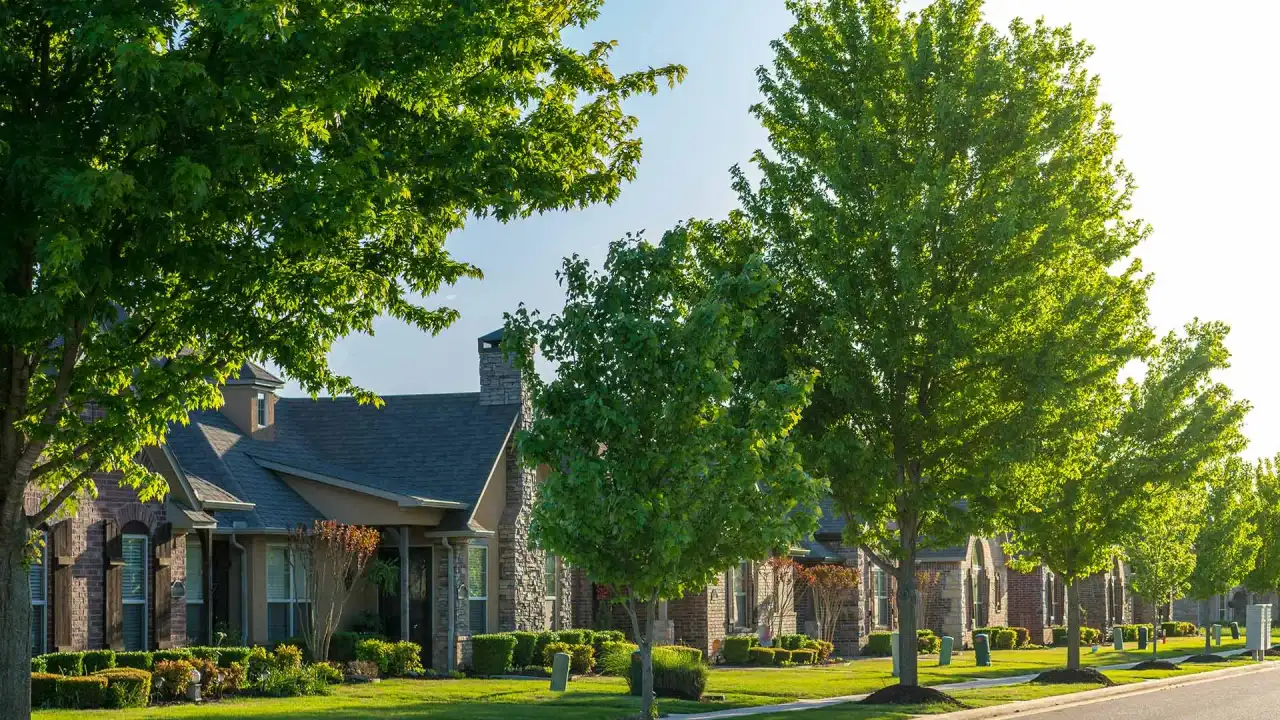
A shade tree is the single highest value thing you can add to a North Texas property, and it is also the decision you live with longest. Get the species and the placement right and it improves the house for fifty years. Get either wrong and you are paying to remove it in fifteen.
Fall is when that decision should be acted on, and here is how we think about it.
Why Fall Beats Spring Here
When any tree goes into the ground, it has a root system sized for a container and a canopy sized for a full grown plant. Until roots catch up, the tree cannot reliably supply what the leaves are losing to the air. That gap is where new trees die.
Plant in March and the gap opens at the worst moment. Warming days push the tree into leaf, water demand climbs, and then a Fort Worth summer arrives with weeks above a hundred. A tree four months in the ground is still fundamentally a container plant sitting in a hole.
Plant in October and the sequence reverses. Cooling air slows top growth almost to nothing, but our soil holds warmth deep into the year, and roots keep growing whenever soil stays above roughly 45 degrees. That means real root development through November and December.
By the time next June arrives it has had two full growing periods underground. That is the difference between a tree that shrugs off its first summer and one you replace.
Species That Actually Thrive Here
Our conditions ask three things at once: sustained heat, heavy clay that swings between saturated and concrete hard, and long stretches without meaningful rain.
Live oak remains the backbone of this region. It handles heat, wind, and our soil, holds its leaves through most of the winter, and lives a very long time. It needs room, so it belongs where a wide canopy can develop rather than squeezed beside a driveway.
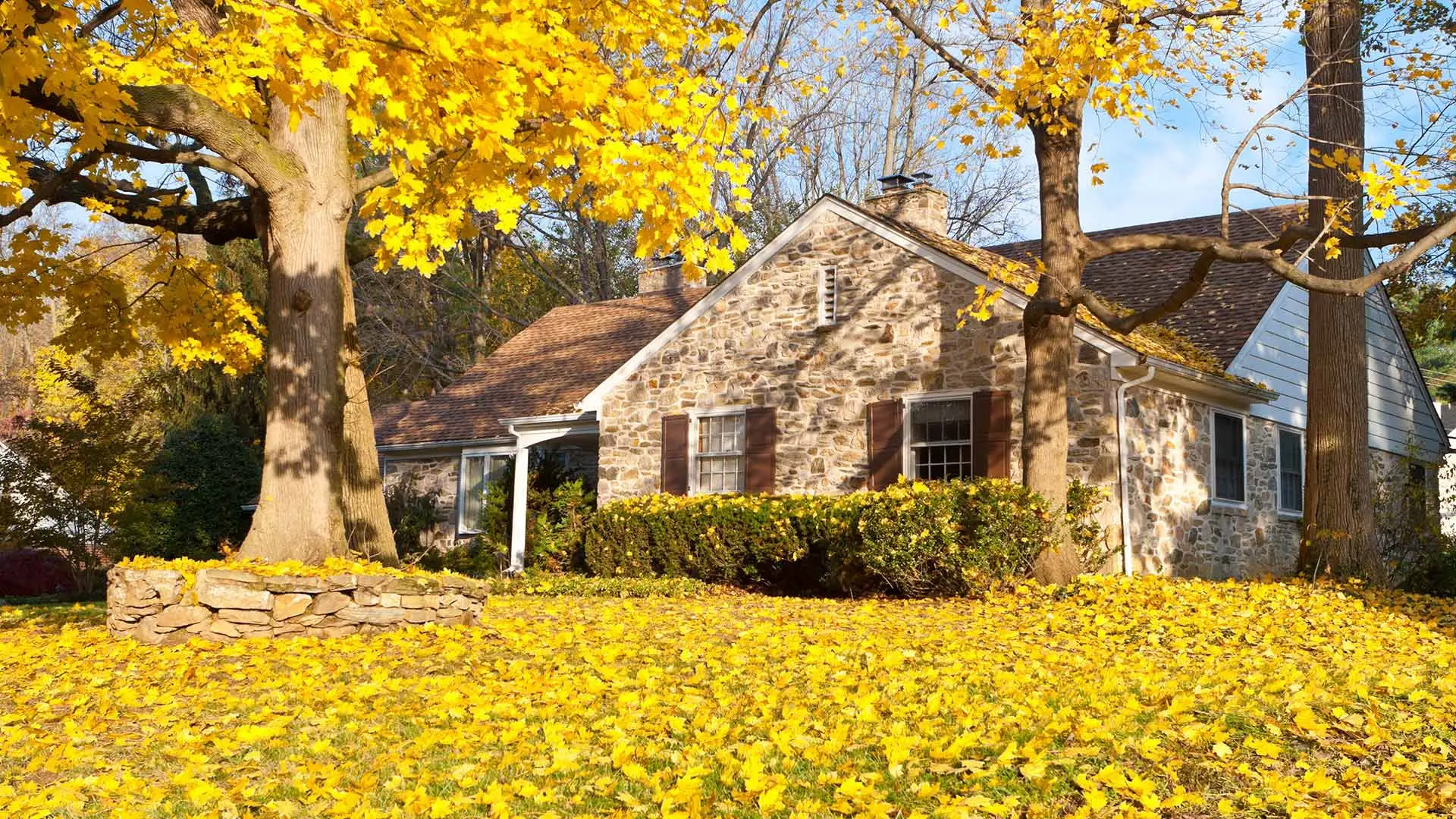
Cedar elm is genuinely underused. Tough, tolerant of clay and of both wet and dry spells, and it gives reliable yellow fall color, which is not something North Texas offers in abundance.
Shumard oak and Texas red oak both give good fall color and handle our conditions well. Bur oak is another excellent large shade tree for a property with the space.
For smaller spaces, crape myrtle earns its ubiquity with long bloom, heat tolerance, and attractive bark. Choose the cultivar by mature size and it never needs the brutal topping you see all over town. Mexican plum and desert willow are both good small ornamentals.
What We Have Stopped Planting
We would rather be honest about this than let you learn it by replacement.
Bradford pear should not be planted at all. Weak branch structure that splits in storms, a short life, and it has become genuinely invasive across Texas.
Silver maple grows fast, which is its entire appeal, and it has brittle wood, aggressive surface roots that lift paving, and a short life in our climate.
Arizona ash was planted heavily here decades ago and is short lived and prone to decline. If you have one reaching the end, plan the replacement rather than treating the decline.
And red maple, which is beautiful, frequently struggles with our alkaline clay and shows the yellowing between green veins that indicates it cannot take up iron at our soil pH.
Placement Is Half the Decision
The most common planting error in North Texas is putting a large tree where a small one belonged.
Look up before you dig. Overhead utility lines rule out anything that will reach them, and utilities do not prune for aesthetics. Call for utility locates before digging regardless, since underground lines are the other half of that problem.
Distance from the house matters more on our soil than in most regions. Clay shrinks when it dries, and a large tree drawing heavy moisture from soil close to a foundation contributes to differential movement. Give big shade trees genuine distance from the structure and from the driveway.
Then think about what you want the tree to do. A shade tree placed on the west or southwest side of the house does real work reducing afternoon heat load in summer, which in Fort Worth is worth money on a utility bill. That is generally a better use of a large tree than the front yard center where most people default to.
The Two Mistakes That Kill Trees Slowly
Planting too deep is the first, and it is extremely common because it looks fine on day one.
The root flare, where the trunk widens as it meets the roots, belongs at or just above the finished soil level. Buried too deep, a tree declines slowly over several years in a way that is hard to diagnose and impossible to reverse without replanting. If you cannot see a flare on a container tree, it is often buried in the pot and needs excavating before it goes in the ground.
Mulch piled against the trunk is the second. Mulch belongs spread in a broad, shallow ring with a clear gap around the trunk, never heaped into a cone. Piled mulch holds moisture against bark, invites rot and rodents, and encourages roots to circle up into the mulch rather than out into the soil.
On our clay, there is a third worth naming: digging a small, smooth sided hole creates something close to a pot in the ground, with slick walls roots struggle to penetrate. The hole should be wide, two to three times the root ball, with roughened sides, and no deeper than the root ball itself.
Backfill With What You Dug Out
This runs against common wisdom, so it is worth explaining rather than asserting.
The instinct with heavy clay is to throw the native soil away and backfill with bagged garden soil. It feels obviously right and causes a specific, well documented problem. You have created a pocket of light soil surrounded by dense clay. Water moves into that pocket easily and cannot move out, so the root ball sits in a bathtub. Roots that reach the boundary tend to turn and circle rather than push through.
Current practice is to backfill mostly with the native soil you removed, broken up well, with at most a modest proportion of organic matter mixed evenly through it. The tree then meets consistent conditions in every direction and its roots grow outward into the surrounding ground, which is where they need to be.
Where organic matter genuinely helps is on the surface, spread across the root zone as mulch and topped up annually.
Watering the First Two Years
New trees need water long after they look established, and this is where most losses happen after a good planting.
The rule of thumb is deep, slow watering directly over the root ball, once or twice a week depending on weather, through the first full year and tapering through the second. Slow application matters on clay, since fast water runs off rather than soaking in.
Keep going into winter. A dry Fort Worth autumn followed by a hard freeze is what damages otherwise healthy new plantings, because a tree going into a freeze already short of water has no buffer.
And remember that lawn irrigation is not tree watering. Sprinklers wet the top couple of inches across a wide area, which is what turf wants and not what a new tree root ball needs.
What to Do Next
Walk your property and pick the spot before you pick the tree. Look up for utility lines, note distance from the house and driveway, and think about where afternoon shade would actually help.
Then choose a species suited to the space at maturity rather than the one that looks best at the nursery today.
If you would rather have someone assess placement and handle the planting properly, Buffalo Outdoor serves Fort Worth, Keller, Aledo, Saginaw, Benbrook, White Settlement, Lake Worth, Roanoke, and the surrounding area. Call 817-349-0580 or visit buffalooutdoor.com.
Here is what to expect. We will talk about placement before species, tell you honestly if the spot you have in mind will cause problems in twenty years, and set the root flare at the right level. We would rather plant a smaller tree in the right place than a larger one in the wrong one.