Skip to content

Fertilization

Why Your Fort Worth Lawn Turns Brown Every Winter, and What Fall Fertilization Can and Cannot Do

Buffalo Outdoor • October 2026 • Fort Worth, TX • 7 min read
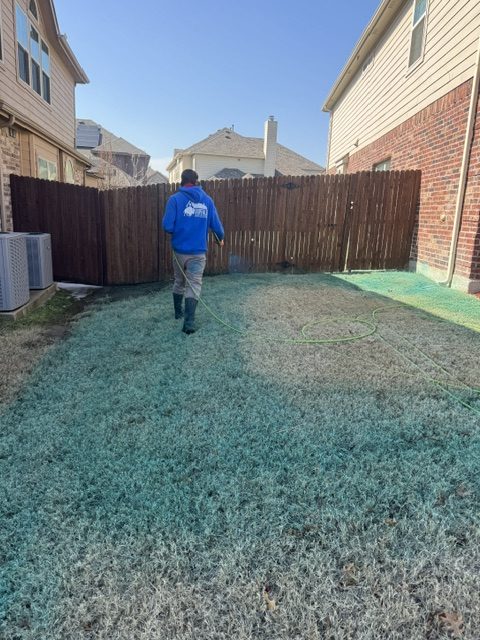
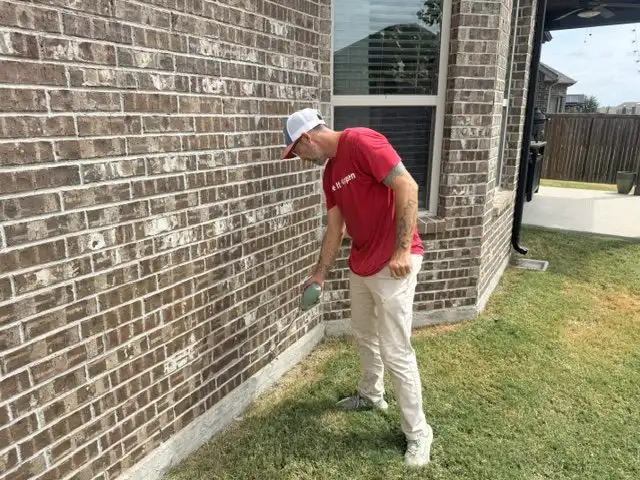
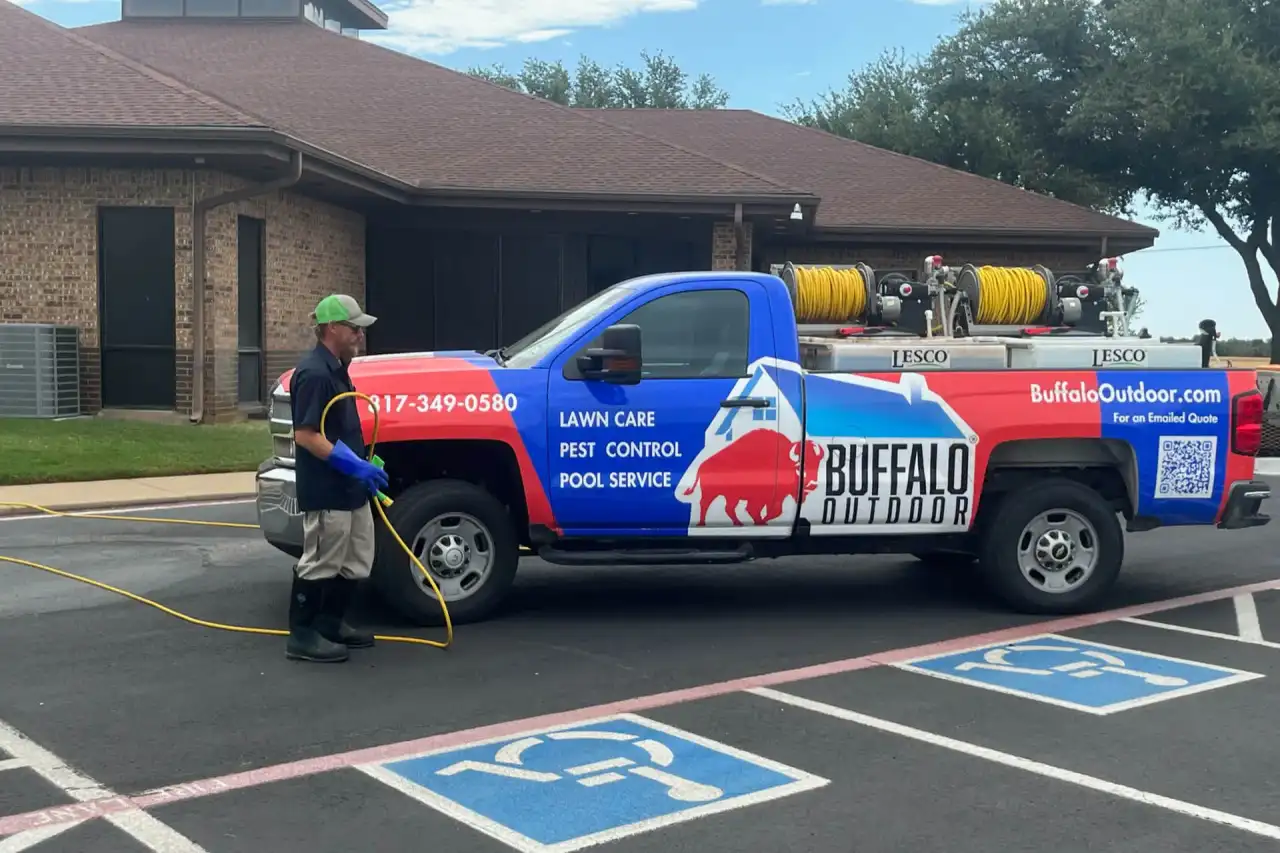
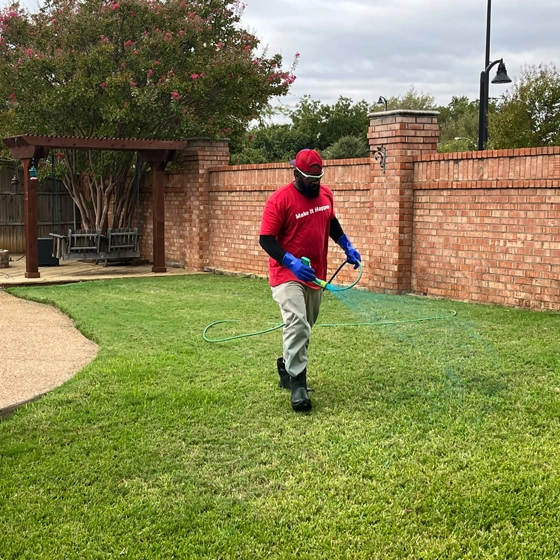
Buffalo Outdoor technician applying a liquid lawn treatment to a dormant Bermuda lawn in a Fort Worth, TX backyard

Short Answer: If your Fort Worth lawn turns tan after the first hard freeze, that is normal. Bermuda, St. Augustine, and Zoysia are warm-season grasses that go dormant in winter, and no fertilizer will keep them green through January. What fall fertilization does is help the grass store energy in its roots before dormancy, so it survives winter in better shape and greens up faster and more evenly in spring. Feeding a lawn that is already dormant does very little. The real goal of fall care is a healthy dormant lawn now and a stronger green-up next spring.

If you are reading this, you may have already watched it happen. One morning in late November there is frost on the roof, and within a week or two the lawn you worked on all summer has turned the color of straw. Maybe you fertilized in the fall and expected it to stay green longer. Maybe the neighbor's lawn somehow still looks green and yours does not.

That moment is unsettling for a lot of homeowners, especially people who moved here from places with cool-season grass that stays green much of the winter. It is natural to wonder whether something went wrong. The honest answer, almost always, is that nothing did. Let's walk through what is happening, what fall fertilization really accomplishes, and how to tell normal dormancy from a problem worth worrying about.

What Dormancy Actually Is

The lawns we care for across Fort Worth, Keller, Aledo, and Benbrook are warm-season grasses. Bermuda, St. Augustine, and Zoysia all evolved in warm climates and grow best when temperatures are high. When soil temperatures drop and the first hard freeze arrives, they do something smart: they shut down top growth and go dormant.

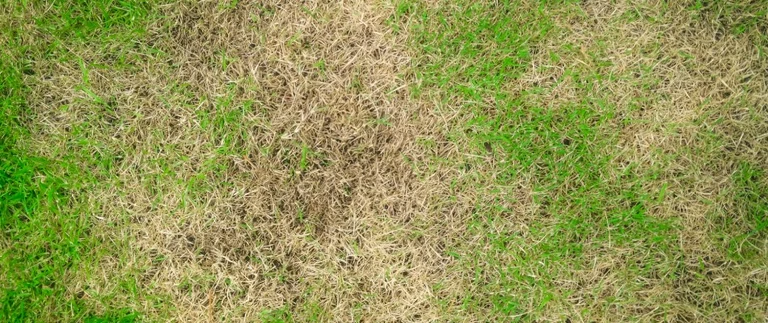
Dormancy is a survival strategy, not a sickness. The leaf blades turn tan because the plant stops making chlorophyll and pulls resources down into its crowns, roots, rhizomes, and stolons. The living part of the grass is still there, just below the surface, waiting for the soil to warm in spring.

Imagine a bear hibernating for the winter. It does not look very active, but it is very much alive, living on the reserves it built up in the fall. Your lawn is doing the same thing.

What Fall Fertilization Does

This is where expectations sometimes get crossed. Many homeowners fertilize in the fall hoping to keep the lawn green longer into winter. A fall feeding can help a lawn hold good color through October and into November while it is still growing. But once the freeze comes, a warm-season lawn is going to go dormant regardless of how well it was fed.

The real value of fall fertilization happens underground. In September and October, the grass is still actively taking up nutrients, but instead of pouring them into new leaves, it is storing energy in its roots. A well-fed lawn heads into dormancy with a full tank. A lawn that skipped fall feeding heads into dormancy running low.

That difference shows up next spring. A well-fed lawn wakes up faster, greens more evenly, and fills in thin spots more quickly. A hungry lawn tends to green up slowly and unevenly, leaving bare patches where winter weeds and spring weeds move in.

Why Feeding a Dormant Lawn Does Not Help

Once a warm-season lawn is fully dormant, it is not actively taking up much fertilizer. Product applied in December or January mostly sits there. Some of it may wash off in winter rains into the street and storm drains. Some of it may feed winter weeds, which are actively growing while your grass is not.

That is why timing is everything. In the Fort Worth area, the last fall feeding should usually be down in the first half of October, roughly four to six weeks before the first freeze. After that, the lawn's needs shift to protection rather than feeding.

Why Some Lawns Go Dormant Earlier Than Others

Homeowners often notice that their lawn turns brown a week or two before the neighbor's, or that one part of the yard goes dormant first. That is normal, too. Bermuda usually goes dormant earlier and more completely than St. Augustine. Low spots where cold air settles brown first. Lawns that were stressed by summer drought, heavy traffic, or insect damage often head into dormancy sooner than healthy ones. A well-fed lawn in a protected spot near the house may hold some color a little longer. None of these differences mean anything is wrong. They simply reflect the grass type, the microclimate, and how the lawn went into fall.

Dormant or Dead? How to Tell

A brown lawn in winter is normal. But sometimes homeowners want reassurance, especially after a very cold snap or a summer that was hard on the grass. Here are a few ways to check.

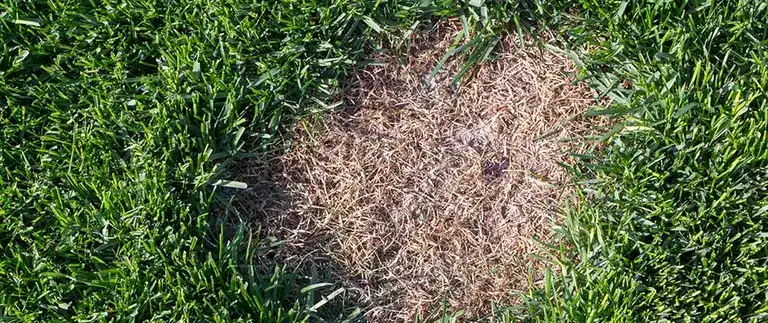
First, look at the pattern. Dormancy is even. The whole lawn turns a uniform tan at roughly the same time. Damage from insects, disease, or drought tends to be patchy, with irregular dead areas next to healthier grass, often appearing before the freeze rather than after.

Second, check the base of the plant. Pull back the brown blades and look at the crowns and runners near the soil. On a dormant lawn, they are firm and often show a hint of green or white inside when you scratch them. On dead grass, they are dry, brittle, and break apart easily.

Third, give it time. The truest test comes in spring. If the lawn greens up as the soil warms, it was simply dormant. If some areas stay brown well after the rest of the lawn has turned green, those spots deserve a closer look.

What About the Green Lawns in Winter?

If you see a bright green lawn in January around Fort Worth, there are a few possible explanations. It might be overseeded with ryegrass, a cool-season grass that grows through the winter and dies out in late spring. It might be covered with green winter weeds like poa annua, which can look like grass from the street. Or it might have been treated with a turf colorant, a pigment that tints dormant grass green without changing what the plant is doing underneath.

Each of those has its own trade-offs. Overseeding takes ongoing mowing and watering through the winter and can compete with the warm-season grass as it tries to green up in spring. Winter weeds are, well, weeds. Colorants are cosmetic and do not feed the lawn. None of them replace fall fertilization for the long-term health of a warm-season lawn.

How to Care for a Dormant Lawn

A dormant lawn needs much less from you than a growing one, but it still benefits from a few things. Water occasionally during long dry spells in winter, since dormant grass can still dry out, especially in the thin, rocky soils common out toward Aledo and Benbrook. Keep heavy foot traffic and parked vehicles off it as much as possible, because dormant grass cannot repair itself until spring.

Keep leaves from piling up and matting down, since a thick layer can smother the grass and invite disease, especially on St. Augustine. And keep an eye out for winter weeds. A fall pre-emergent stops many of them, and any that break through can be treated during mild stretches in winter.

What Spring Looks Like After a Good Fall

Imagine this. It is late March. The soil is warming, and lawns across the neighborhood are starting to wake up. Yours greens from edge to edge in a matter of weeks, filling in evenly with no bare patches along the driveway or near the fence. The lawn that looked like straw in January is thick and growing by April. That turnaround was set up in September and October.

What to Do Next

If you are planning your own fall care, aim to have the final feeding down in the first half of October, use a product with moderate nitrogen and good potassium, and pair it with a pre-emergent for winter weeds. Once the lawn goes dormant, switch your focus to occasional winter watering during dry stretches, keeping leaves off the turf, and watching for weeds.

If you would rather have someone else handle the timing decisions, product selection, and application for your lawn, we are here for that. Buffalo Outdoor serves Fort Worth, Keller, Aledo, Benbrook, and the surrounding area. Call 817-799-6823 or visit buffalooutdoor.com to request a free quote.

Here is what to expect. We will look at your lawn, talk through what it went through this year, and explain what we would do this fall and why. If you are worried that part of your lawn is damaged rather than dormant, we will take a look and give you an honest answer.
Keep reading

Bermuda vs. St. Augustine: How Fall Fertilization Differs for Fort Worth's Two Most Common Lawns
FertilizationBermuda vs. St. Augustine: How Fall Fertilization Differs for Fort Worth's Two Most Common LawnsShort Answer: Bermuda and St. Augustine both benefit from fall feeding in Fort Worth, but they need different handling. Bermuda is a heavy feeder that grows in full sun and tolerates a moderate nitrogen feeding in September and early October. St. Augustine grows in shade, is prone to large patch fun2026-10-01 · 7 min readRead the article →
Fall Fertilization and Pre-Emergent in Fort Worth: How October Sets Up Next Spring's Lawn
FertilizationFall Fertilization and Pre-Emergent in Fort Worth: How October Sets Up Next Spring's LawnShort Answer: In Fort Worth, October is when two things happen at once. Bermuda, St. Augustine, and Zoysia lawns are storing energy in their roots before winter dormancy, and winter weeds like henbit, chickweed, and annual bluegrass (poa annua) are starting to sprout. A fall feeding with modest nitr2026-10-01 · 7 min readRead the article →
How Many Fall Cleanups Does a Fort Worth Yard Need? Timing Leaf Removal Around Our Trees
Fall CleanupHow Many Fall Cleanups Does a Fort Worth Yard Need? Timing Leaf Removal Around Our TreesShort Answer: Most Fort Worth yards with a few mature trees do best with two fall cleanups, and heavily wooded lots often need three. Our most common shade trees, including post oaks, red oaks, cedar elms, and pecans, drop most of their leaves from mid November into December, while live oaks shed ma2026-10-01 · 7 min readRead the article →
What Happens During a Professional Fall Cleanup, From the First Leaf to the Final Haul-Off
Fall CleanupWhat Happens During a Professional Fall Cleanup, From the First Leaf to the Final Haul-OffShort Answer: A professional fall cleanup in Fort Worth usually follows the same order: a walk-through, clearing leaves out of beds and tight corners, gathering leaves off the lawn with blowers and leaf vacuums, cleaning patios and hard surfaces, a final mow or tidy pass, and loading everything into2026-10-01 · 7 min readRead the article →
Fall Bed Cleanup and Fresh Mulch: Getting Fort Worth Landscape Beds Ready for Winter
Fall CleanupFall Bed Cleanup and Fresh Mulch: Getting Fort Worth Landscape Beds Ready for WinterShort Answer: Fall is one of the best times to clean up and mulch landscape beds in Fort Worth. Clearing out spent annuals, cutting back finished perennials, pulling weeds, and removing leaf buildup gets beds ready for winter. A fresh two to three inch layer of mulch then insulates roots against our2026-10-01 · 7 min readRead the article →
Weep Holes, Eaves, and Cracks: Where Fall Pests Get Into Fort Worth Brick Homes
Pest ControlWeep Holes, Eaves, and Cracks: Where Fall Pests Get Into Fort Worth Brick HomesShort Answer: Most brick homes around Fort Worth have weep holes, small gaps in the bottom row of brick that let moisture drain out of the wall. They are necessary, but they also give crickets, spiders, scorpions, roaches, and ants an open path into the wall cavity, especially as pests look for shel2026-10-01 · 7 min readRead the article →
Spiders, Crickets, and Scorpions: What Fall Pest Control Looks Like in Fort Worth
Pest ControlSpiders, Crickets, and Scorpions: What Fall Pest Control Looks Like in Fort WorthShort Answer: Fall around Fort Worth brings a predictable wave of pests: crickets move toward homes and lights, spiders build webs under eaves and patios to catch them, and scorpions hunt both while looking for sheltered spots for winter. Because these pests feed on each other, controlling one usual2026-10-01 · 7 min readRead the article →
What Landscape Maintenance Actually Includes in Fort Worth
LandscapingWhat Landscape Maintenance Actually Includes in Fort WorthWhat a landscape maintenance program in Fort Worth actually covers, what is billed separately, and the questions that make two similar looking quotes comparable.2026-09-23 · 7 min readRead the article →
Fixing Yard Drainage Before North Texas Winter Rain
LandscapingFixing Yard Drainage Before North Texas Winter RainNorth Texas clay sheds water rather than absorbing it. How to read where your Fort Worth yard drains badly, which fixes are cheap, and why fall is the season to do it.2026-09-23 · 7 min readRead the article →
Mulch in Fall: Why the Timing Matters in North Texas
LandscapingMulch in Fall: Why the Timing Matters in North TexasMulch does more in a North Texas fall than it does in spring. Why the timing matters, how deep it should actually be, and the volcano mistake that kills trees slowly.2026-09-16 · 7 min readRead the article →
Fall Tree Planting in Fort Worth: What to Plant and Where
LandscapingFall Tree Planting in Fort Worth: What to Plant and WhereFall is the right season to plant a shade tree in Fort Worth. Which species handle our clay and heat, where to place them, and the planting mistakes that kill trees slowly.2026-09-16 · 7 min readRead the article →
Overseeding with Ryegrass in Fort Worth: Worth It or Not?
LandscapingOverseeding with Ryegrass in Fort Worth: Worth It or Not?Overseeding dormant Bermuda with winter ryegrass gives a green Fort Worth lawn from November to March. What it actually costs your Bermuda in spring, and who it suits.2026-09-09 · 8 min readRead the article →
What Landscape Design and Installation Costs in Fort Worth
LandscapingWhat Landscape Design and Installation Costs in Fort WorthWhat landscape design and installation costs around Fort Worth, how the number is built, where budgets go further than expected, and how to compare estimates fairly.2026-09-09 · 7 min readRead the article →
Landscape Lighting: Why Fall Is the Season to Add It
LandscapingLandscape Lighting: Why Fall Is the Season to Add ItLandscape lighting adds usable evening hours and real security. Why fall is the right season to install it in Fort Worth, what it costs, and the design mistakes to avoid.2026-09-02 · 7 min readRead the article →
Fall Armyworms in Fort Worth Lawns
LandscapingFall Armyworms in Fort Worth LawnsFall armyworms can strip a Fort Worth lawn in two days. What the damage looks like, the soap flush that confirms them, and why speed matters more than product choice.2026-09-02 · 8 min readRead the article →
Why Fall Fertilization Still Matters for North Texas Lawns
Lawn FertilizationWhy Fall Fertilization Still Matters for North Texas LawnsWhy a fall feeding is important for warm-season North Texas lawns even as they head toward dormancy, what it does for roots and spring green-up, and how to time it.2026-09-01 · 7 min readRead the article →
The Fall Winterizer Feeding: Preparing Your Lawn for Dormancy
Lawn FertilizationThe Fall Winterizer Feeding: Preparing Your Lawn for DormancyWhat a winterizer feeding is, why it matters for warm-season North Texas lawns heading into dormancy, and how potassium builds the cold hardiness your lawn needs.2026-09-01 · 7 min readRead the article →
Feeding Bermuda, St. Augustine, and Zoysia Before Winter
Lawn FertilizationFeeding Bermuda, St. Augustine, and Zoysia Before WinterHow fall feeding works for the warm-season grasses common in North Texas, why each benefits from a fall winterizer, and how to prepare your lawn for dormancy.2026-09-01 · 7 min readRead the article →
Fall Fertilization Mistakes North Texas Homeowners Make
Lawn FertilizationFall Fertilization Mistakes North Texas Homeowners MakeThe most common fall fertilization mistakes on warm-season North Texas lawns, from wrong timing to too much nitrogen, and how to feed your lawn correctly before winter.2026-09-01 · 7 min readRead the article →
Why a Fall Cleanup Is About More Than Curb Appeal
Fall CleanupsWhy a Fall Cleanup Is About More Than Curb AppealWhy a fall cleanup matters for the health of your North Texas lawn, not just its looks, from preventing smothered grass to reducing winter disease and pests.2026-09-01 · 7 min readRead the article →
What Happens If You Leave the Leaves on Your Lawn
Fall CleanupsWhat Happens If You Leave the Leaves on Your LawnWhat really happens to a North Texas lawn left covered in fallen leaves through winter, from smothered grass to disease and pests, and why timely leaf removal matters.2026-09-01 · 7 min readRead the article →
What a Professional Fall Cleanup Includes
Fall CleanupsWhat a Professional Fall Cleanup IncludesWhat a professional fall cleanup actually covers, from full leaf removal and hauling to bed cleanup and cutting back spent growth, and why it beats a weekend of raking.2026-09-01 · 7 min readRead the article →
Leaf Removal in North Texas: Why It Is a Bigger Job Than It Looks
Fall CleanupsLeaf Removal in North Texas: Why It Is a Bigger Job Than It LooksWhy leaf removal in North Texas is a bigger, longer job than homeowners expect, from heavy loads and repeated drops to disposal, and how professional crews handle it.2026-09-01 · 7 min readRead the article →
When Your Fort Worth Lawn Browns in July | Buffalo Outdoor
When Your Fort Worth Lawn Browns in July | Buffalo OutdoorWhen a Fort Worth area lawn browns in July, the cause is almost always one of four things: heat stress, drought, disease, or insects.Jul 23, 2026Read the article →
Get Lawn & Landscape Service.
Request your free quote today.
GET A QUOTE
© 2026 Buffalo Outdoor  |  All Rights Reserved  |  Privacy Policy  |  Your Privacy Choices  |  Terms of Use
Buffalo Outdoor awards: Inc. 5000 2023, Expertise.com Best Landscaping Services in Fort Worth 2021, and Fort Worth Magazine Best of Fort Worth 2022, 2024, 2025 and 2026