Skip to content

Fall Cleanup

How Many Fall Cleanups Does a Fort Worth Yard Need? Timing Leaf Removal Around Our Trees

Buffalo Outdoor • October 2026 • Fort Worth, TX • 7 min read

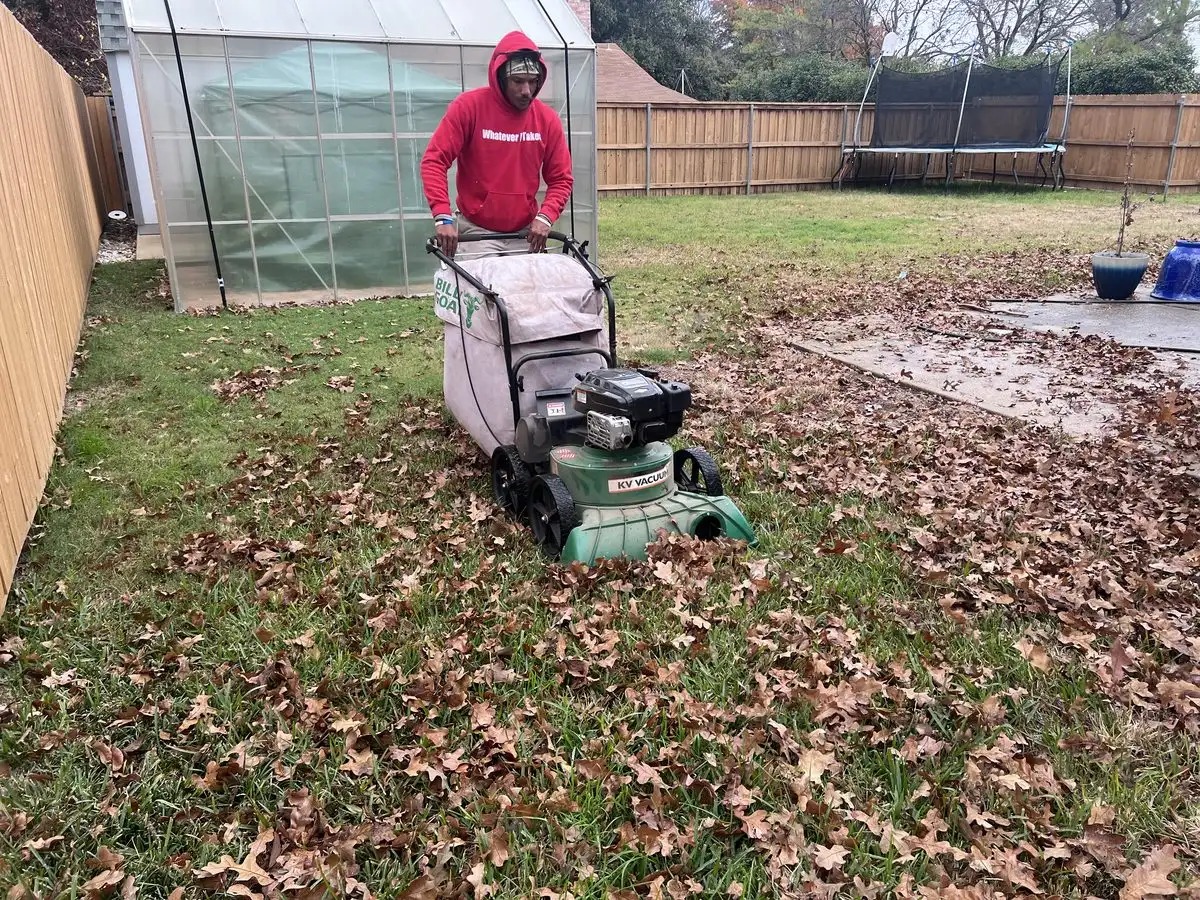
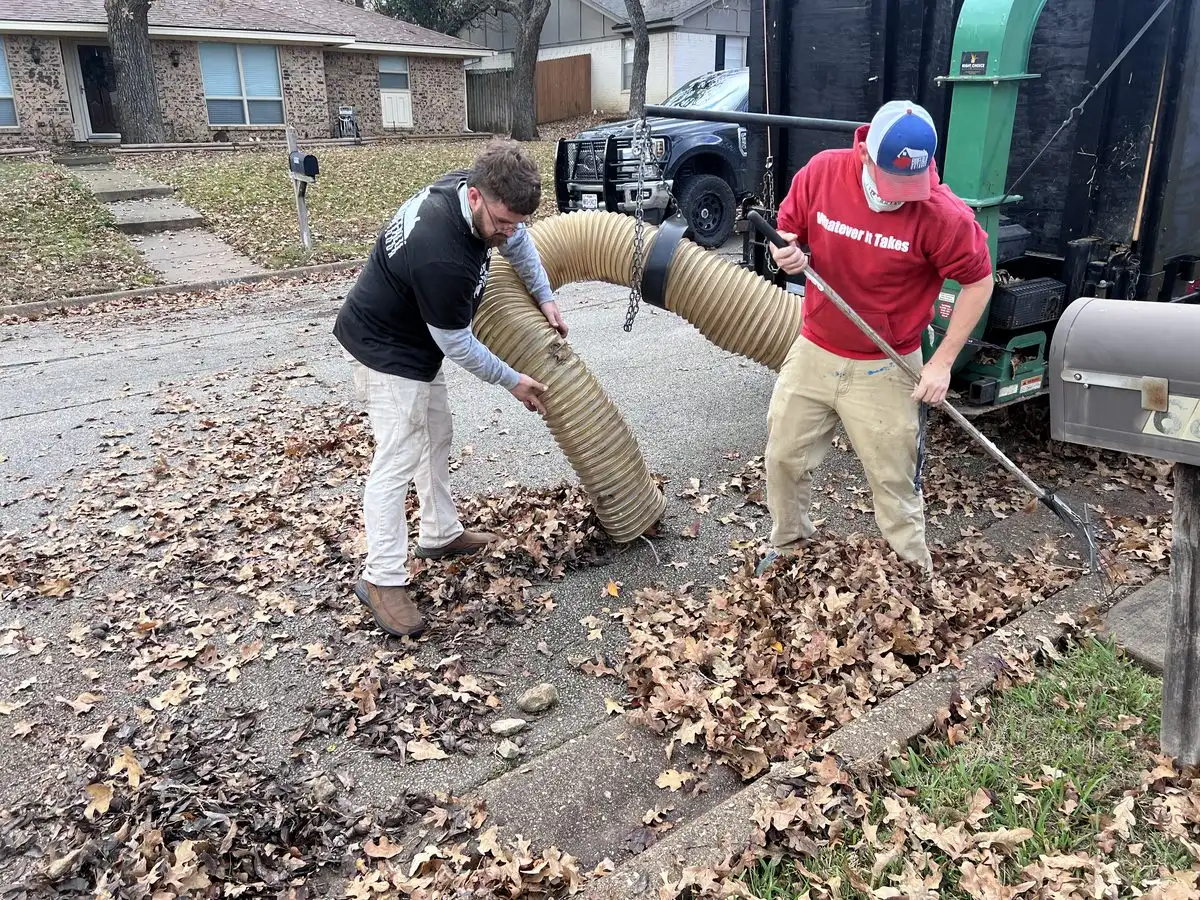
Buffalo Outdoor crew loading fall oak leaves into a debris truck during a fall cleanup in Fort Worth, TX

How Many Fall Cleanups Does a Fort Worth Yard Need? Timing Leaf Removal Around Our Trees

Short Answer: Most Fort Worth yards with a few mature trees do best with two fall cleanups, and heavily wooded lots often need three. Our most common shade trees, including post oaks, red oaks, cedar elms, and pecans, drop most of their leaves from mid November into December, while live oaks shed mainly in spring. An early visit in November clears the first wave and the summer bed debris. A later visit, once the trees are mostly bare, handles the bulk. A single cleanup works too, but it should be scheduled late, or the yard will be covered again within a week or two.

If you have lived in Fort Worth for a few years, you know the pattern. You clean up the leaves in early November, feel good about the yard for about ten days, and then look outside to find it covered all over again. By Christmas, the oaks are still letting go, and you are wondering whether there is any point in cleaning up at all until every tree is bare.

That is a fair question, and it is one we hear from homeowners every October. Nobody wants to pay for a cleanup that gets undone a week later. And nobody wants to leave the lawn buried under leaves for six weeks either. The answer lies in matching the cleanup schedule to the trees you actually have.

When Our Trees Actually Drop Their Leaves

Much of what you read about fall cleanup online is written for northern states, where the leaves come down in October and the job is done by Halloween. North Texas runs on a different calendar.

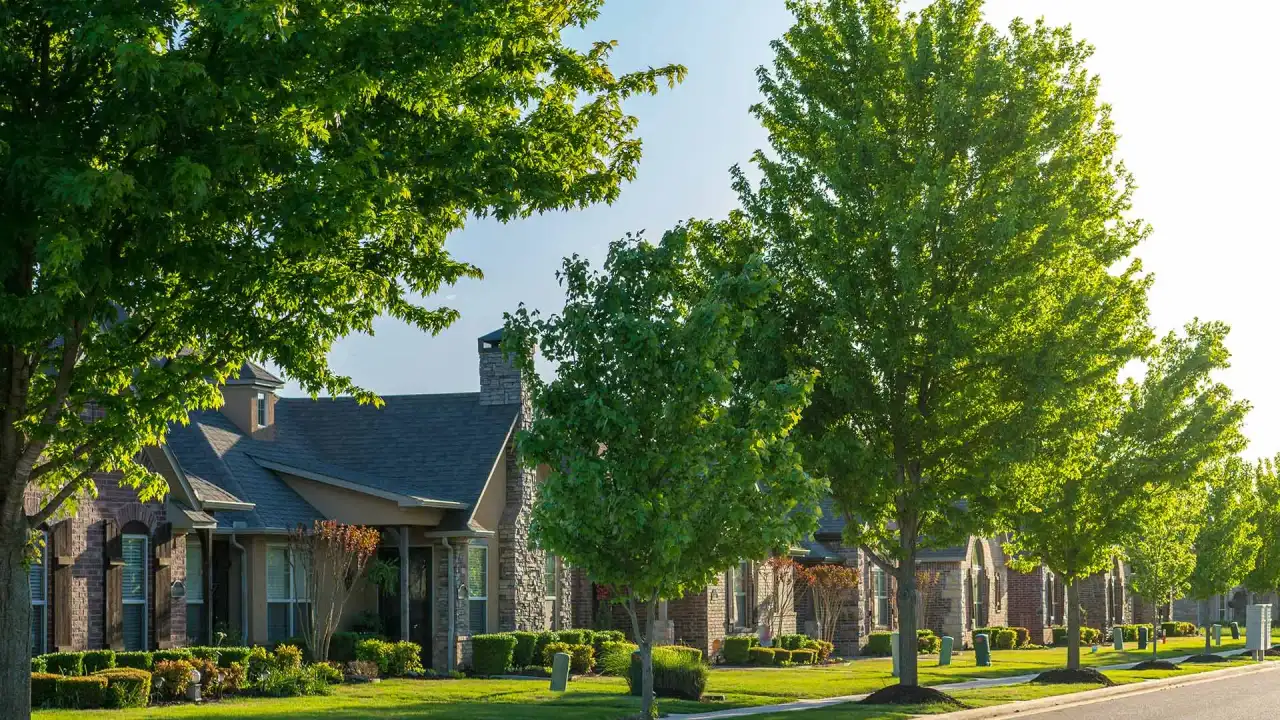
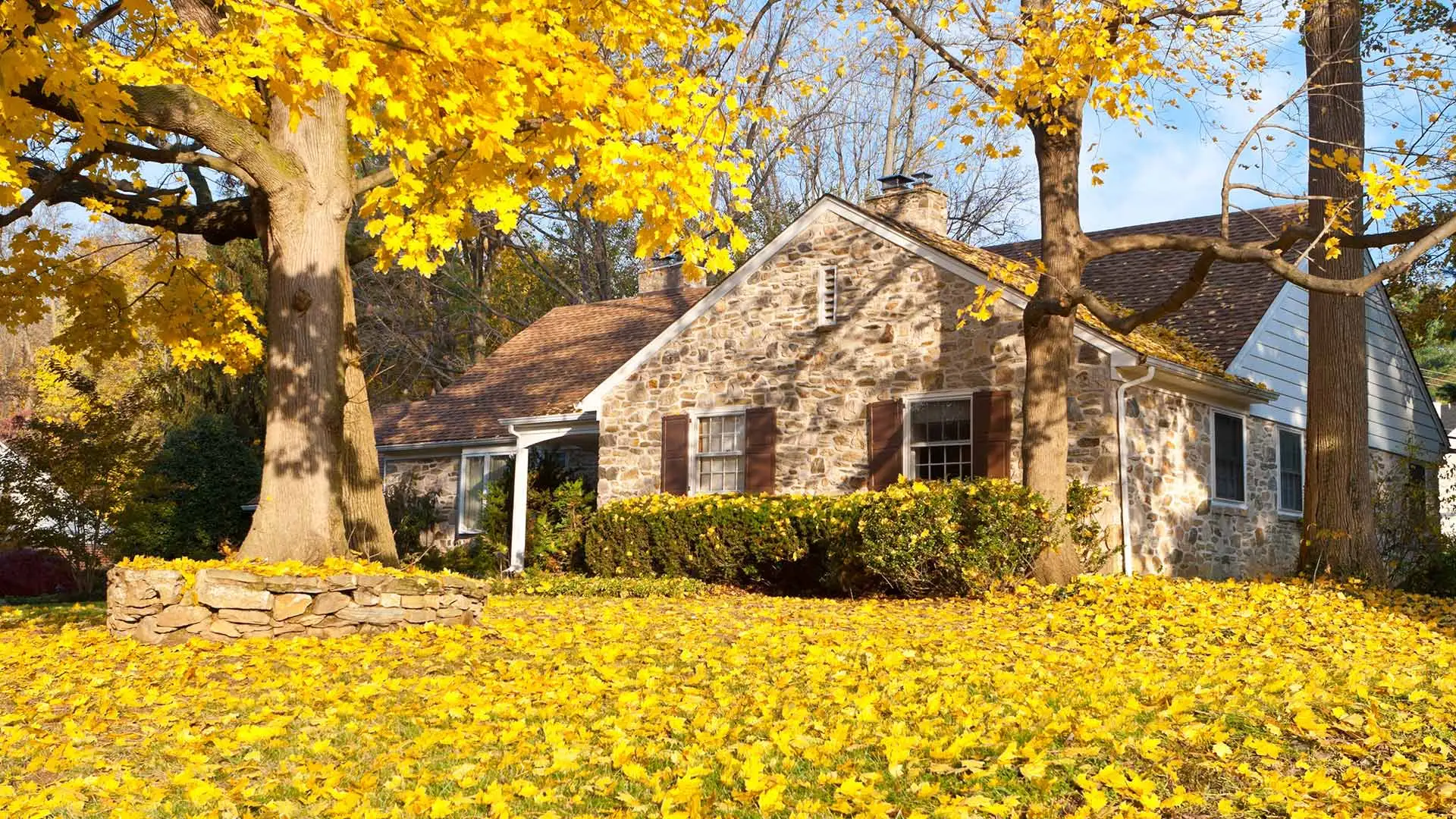
Across Fort Worth, Keller, Aledo, and Benbrook, the most common shade trees include post oaks, Shumard and red oaks, cedar elms, bur oaks, pecans, and hackberries. Most of them hold their leaves well into the fall. Cedar elms and hackberries usually start dropping in November. Pecans shed leaves along with hulls and twigs over several weeks. The big oaks, especially post oaks and red oaks, often hang on the longest, with many leaves still coming down in December and some stubborn ones holding until January.

Live oaks are the exception. They are evergreen through the winter and shed most of their old leaves in a rush in early spring as the new ones push out. Homeowners with live oaks often find their heaviest cleanup in March rather than November.

Imagine your yard as a calendar. If you know which trees are on and around your property, you can predict when the heaviest drop will come and plan around it.

Why One Early Cleanup Usually Disappoints

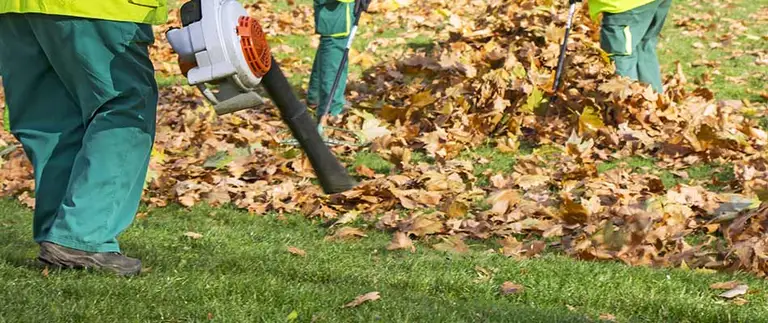
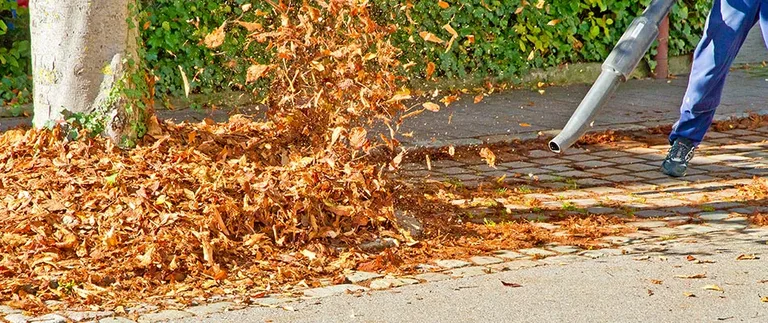
Here is what we see most often when a single cleanup is scheduled too early. The yard looks great for a week or two. Then the oaks and pecans let go of their main crop, and the lawn, beds, and patio are covered again. By the time the homeowner decides to deal with it, the leaves have been sitting on the grass for weeks.

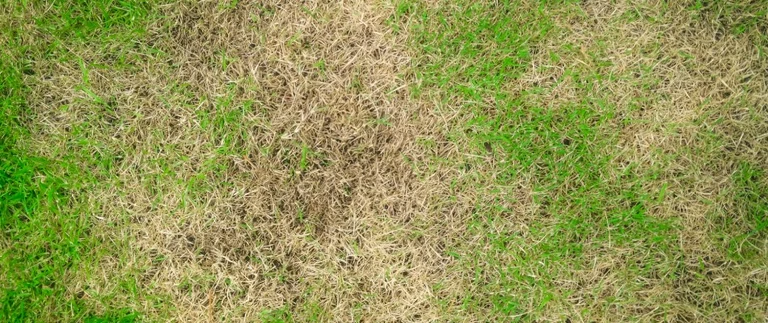
That matters for more than appearance. A thick layer of leaves sitting on Bermuda or St. Augustine in November blocks sunlight while the grass is still trying to store energy before dormancy. Matted, wet leaves also create the cool, damp conditions that large patch fungus loves, especially in shaded St. Augustine. Leaves piled in beds and against the house give pests a sheltered place to spend the winter.

The Two-Visit Approach

For most properties with a handful of mature trees, here is what we have found works best.

The first visit happens in mid to late November. It clears the first wave of leaves from the cedar elms, hackberries, and early droppers. It also handles the summer bed cleanup, removing spent annuals and cutting back perennials that have finished for the season. That gets the lawn clear while the grass is still storing energy and keeps leaves from matting down early.

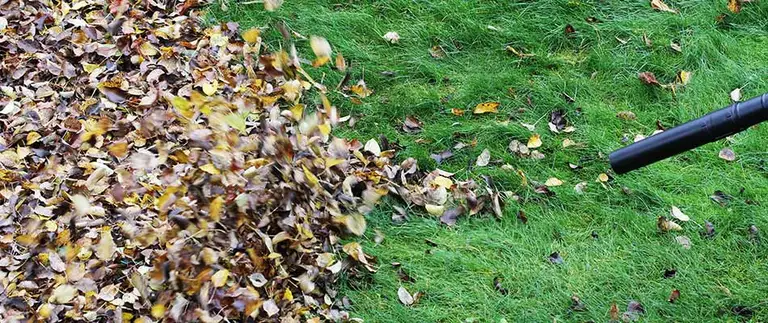
The second visit happens in mid to late December, once the oaks and pecans are mostly bare. This is usually the heaviest cleanup of the season by volume. It clears the lawn, beds, patios, and driveways, and leaves the property clean for the rest of the winter.

Two visits cost more than one, but the yard spends far less time covered, and each visit is more manageable than one enormous cleanup trying to catch up on two months of leaves.

When a Third Visit Makes Sense

Heavily wooded lots need more attention. Properties with several large oaks, a stand of pecans, or neighboring trees that overhang the fence can produce more leaves than two visits can keep up with. Acreage properties out toward Aledo often fall into this category.

For those yards, a third cleanup in January catches the late droppers and anything the winter wind has blown in. Homeowners with live oaks may also want a spring cleanup in March or April when those trees shed.

When One Visit Is Enough

Not every yard needs multiple visits. A property with one or two young trees, or trees that drop mostly onto areas where leaves can be left, may be perfectly fine with a single cleanup. The key is scheduling it late, usually in mid December, after the trees on and around the property are mostly bare.

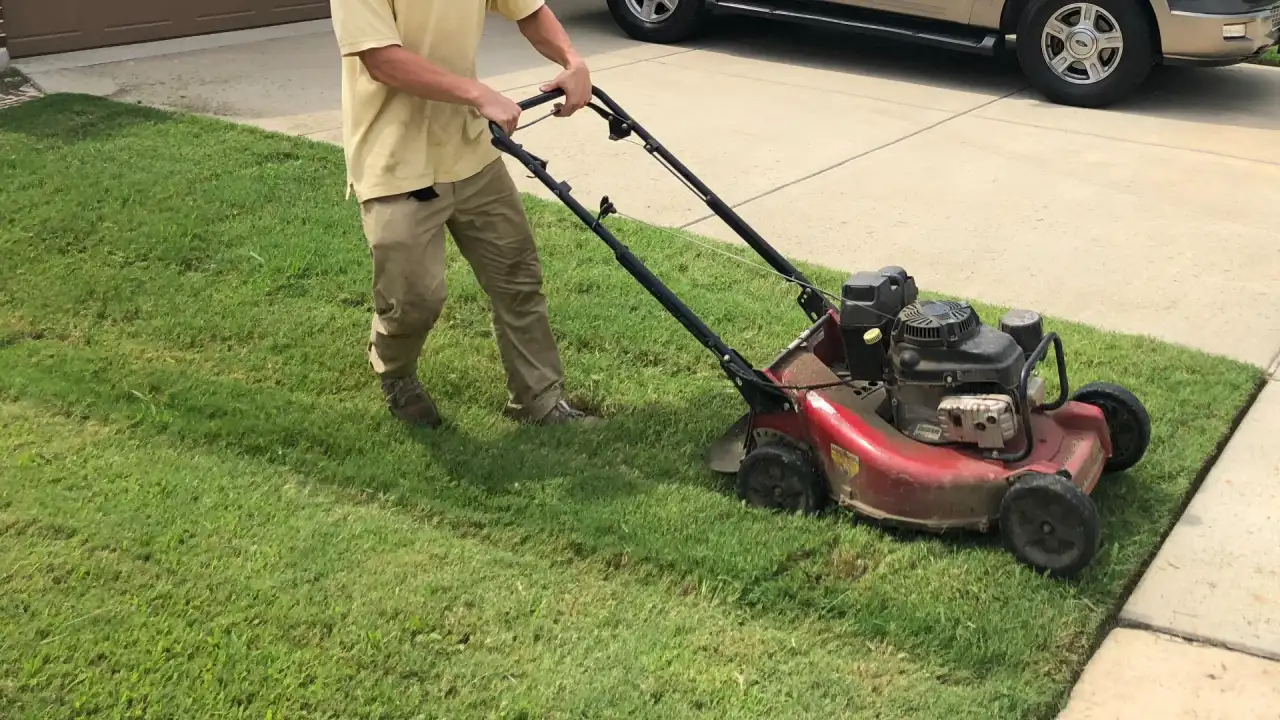
Homeowners who mow regularly through the fall can also stretch a single cleanup further. Mulching light leaf cover with the mower as it falls keeps the volume manageable and returns some organic matter to the soil. Once the leaves are too thick for the mower to handle, it is time for removal.

What About Leaving the Leaves?

You have probably seen advice suggesting you simply leave fallen leaves where they land. In beds, under shrubs, and in natural areas along the back fence, that can be a good choice. A layer of leaves insulates the soil, holds moisture, and shelters beneficial insects through the winter.

On the lawn itself, though, a thick layer is a different story for warm-season grass. Bermuda and St. Augustine are still green and storing energy through much of November, right when the heaviest drop arrives. A blanket of oak leaves cuts off the sunlight they need, and when it stays wet, it invites fungus. The rule of thumb we use is simple: a light scattering on the lawn is fine, but a layer thick enough to hide the grass should come off.

Do Not Forget the Neighbors' Trees

One factor many homeowners overlook is the trees next door. Leaves do not respect fence lines. A neighbor's big red oak can drop as much on your yard as your own trees do, and prevailing winds tend to push leaves into the same corners every year. When we plan cleanups, we look at every tree that drops onto the property, not just the ones on your side of the fence.

Booking Ahead Matters

Fall cleanup season in North Texas is compressed into a few busy weeks. Many homeowners wait until the yard is covered to call, and by then schedules are often full. Booking in October lets you lock in visit dates that line up with your trees rather than taking whatever opening is left.

What a Well-Timed Fall Looks Like

Imagine this. It is the week before Christmas. Your neighbors are out with rakes and blowers trying to catch up on a lawn buried for six weeks. Your yard was cleared in November, and the crew is back to handle the final drop. The grass underneath is healthy, the beds are tidy, and the patio is clean for the holidays. That is what matching the schedule to the trees looks like.

What to Do Next

Take a walk around your property and note which trees drop leaves into your yard, including the neighbors'. If you have mostly cedar elms and young trees, one late cleanup may do. If you have mature oaks or pecans, plan on two visits, one in November and one in December. If you have a wooded lot, consider a third.

If you would rather have someone else handle the leaves, we are here for that. Buffalo Outdoor offers fall cleanups in Fort Worth, Keller, Aledo, Benbrook, and the surrounding area. Call 817-799-6823 or visit buffalooutdoor.com to request a free quote.

Here is what to expect. We will look at the trees on and around your property, recommend the number of visits that makes sense, and spell out what each visit includes. We will let you know when we are coming, and if weather pushes a visit back, we will tell you when it is rescheduled.
Keep reading

What Happens During a Professional Fall Cleanup, From the First Leaf to the Final Haul-Off
Fall CleanupWhat Happens During a Professional Fall Cleanup, From the First Leaf to the Final Haul-OffShort Answer: A professional fall cleanup in Fort Worth usually follows the same order: a walk-through, clearing leaves out of beds and tight corners, gathering leaves off the lawn with blowers and leaf vacuums, cleaning patios and hard surfaces, a final mow or tidy pass, and loading everything into2026-10-01 · 7 min readRead the article →
Fall Bed Cleanup and Fresh Mulch: Getting Fort Worth Landscape Beds Ready for Winter
Fall CleanupFall Bed Cleanup and Fresh Mulch: Getting Fort Worth Landscape Beds Ready for WinterShort Answer: Fall is one of the best times to clean up and mulch landscape beds in Fort Worth. Clearing out spent annuals, cutting back finished perennials, pulling weeds, and removing leaf buildup gets beds ready for winter. A fresh two to three inch layer of mulch then insulates roots against our2026-10-01 · 7 min readRead the article →
Weep Holes, Eaves, and Cracks: Where Fall Pests Get Into Fort Worth Brick Homes
Pest ControlWeep Holes, Eaves, and Cracks: Where Fall Pests Get Into Fort Worth Brick HomesShort Answer: Most brick homes around Fort Worth have weep holes, small gaps in the bottom row of brick that let moisture drain out of the wall. They are necessary, but they also give crickets, spiders, scorpions, roaches, and ants an open path into the wall cavity, especially as pests look for shel2026-10-01 · 7 min readRead the article →
Spiders, Crickets, and Scorpions: What Fall Pest Control Looks Like in Fort Worth
Pest ControlSpiders, Crickets, and Scorpions: What Fall Pest Control Looks Like in Fort WorthShort Answer: Fall around Fort Worth brings a predictable wave of pests: crickets move toward homes and lights, spiders build webs under eaves and patios to catch them, and scorpions hunt both while looking for sheltered spots for winter. Because these pests feed on each other, controlling one usual2026-10-01 · 7 min readRead the article →
Bermuda vs. St. Augustine: How Fall Fertilization Differs for Fort Worth's Two Most Common Lawns
FertilizationBermuda vs. St. Augustine: How Fall Fertilization Differs for Fort Worth's Two Most Common LawnsShort Answer: Bermuda and St. Augustine both benefit from fall feeding in Fort Worth, but they need different handling. Bermuda is a heavy feeder that grows in full sun and tolerates a moderate nitrogen feeding in September and early October. St. Augustine grows in shade, is prone to large patch fun2026-10-01 · 7 min readRead the article →
Fall Fertilization and Pre-Emergent in Fort Worth: How October Sets Up Next Spring's Lawn
FertilizationFall Fertilization and Pre-Emergent in Fort Worth: How October Sets Up Next Spring's LawnShort Answer: In Fort Worth, October is when two things happen at once. Bermuda, St. Augustine, and Zoysia lawns are storing energy in their roots before winter dormancy, and winter weeds like henbit, chickweed, and annual bluegrass (poa annua) are starting to sprout. A fall feeding with modest nitr2026-10-01 · 7 min readRead the article →
What Landscape Maintenance Actually Includes in Fort Worth
LandscapingWhat Landscape Maintenance Actually Includes in Fort WorthWhat a landscape maintenance program in Fort Worth actually covers, what is billed separately, and the questions that make two similar looking quotes comparable.2026-09-23 · 7 min readRead the article →
Fixing Yard Drainage Before North Texas Winter Rain
LandscapingFixing Yard Drainage Before North Texas Winter RainNorth Texas clay sheds water rather than absorbing it. How to read where your Fort Worth yard drains badly, which fixes are cheap, and why fall is the season to do it.2026-09-23 · 7 min readRead the article →
Mulch in Fall: Why the Timing Matters in North Texas
LandscapingMulch in Fall: Why the Timing Matters in North TexasMulch does more in a North Texas fall than it does in spring. Why the timing matters, how deep it should actually be, and the volcano mistake that kills trees slowly.2026-09-16 · 7 min readRead the article →
Fall Tree Planting in Fort Worth: What to Plant and Where
LandscapingFall Tree Planting in Fort Worth: What to Plant and WhereFall is the right season to plant a shade tree in Fort Worth. Which species handle our clay and heat, where to place them, and the planting mistakes that kill trees slowly.2026-09-16 · 7 min readRead the article →
Overseeding with Ryegrass in Fort Worth: Worth It or Not?
LandscapingOverseeding with Ryegrass in Fort Worth: Worth It or Not?Overseeding dormant Bermuda with winter ryegrass gives a green Fort Worth lawn from November to March. What it actually costs your Bermuda in spring, and who it suits.2026-09-09 · 8 min readRead the article →
What Landscape Design and Installation Costs in Fort Worth
LandscapingWhat Landscape Design and Installation Costs in Fort WorthWhat landscape design and installation costs around Fort Worth, how the number is built, where budgets go further than expected, and how to compare estimates fairly.2026-09-09 · 7 min readRead the article →
Landscape Lighting: Why Fall Is the Season to Add It
LandscapingLandscape Lighting: Why Fall Is the Season to Add ItLandscape lighting adds usable evening hours and real security. Why fall is the right season to install it in Fort Worth, what it costs, and the design mistakes to avoid.2026-09-02 · 7 min readRead the article →
Fall Armyworms in Fort Worth Lawns
LandscapingFall Armyworms in Fort Worth LawnsFall armyworms can strip a Fort Worth lawn in two days. What the damage looks like, the soap flush that confirms them, and why speed matters more than product choice.2026-09-02 · 8 min readRead the article →
Why Fall Fertilization Still Matters for North Texas Lawns
Lawn FertilizationWhy Fall Fertilization Still Matters for North Texas LawnsWhy a fall feeding is important for warm-season North Texas lawns even as they head toward dormancy, what it does for roots and spring green-up, and how to time it.2026-09-01 · 7 min readRead the article →
The Fall Winterizer Feeding: Preparing Your Lawn for Dormancy
Lawn FertilizationThe Fall Winterizer Feeding: Preparing Your Lawn for DormancyWhat a winterizer feeding is, why it matters for warm-season North Texas lawns heading into dormancy, and how potassium builds the cold hardiness your lawn needs.2026-09-01 · 7 min readRead the article →
Feeding Bermuda, St. Augustine, and Zoysia Before Winter
Lawn FertilizationFeeding Bermuda, St. Augustine, and Zoysia Before WinterHow fall feeding works for the warm-season grasses common in North Texas, why each benefits from a fall winterizer, and how to prepare your lawn for dormancy.2026-09-01 · 7 min readRead the article →
Fall Fertilization Mistakes North Texas Homeowners Make
Lawn FertilizationFall Fertilization Mistakes North Texas Homeowners MakeThe most common fall fertilization mistakes on warm-season North Texas lawns, from wrong timing to too much nitrogen, and how to feed your lawn correctly before winter.2026-09-01 · 7 min readRead the article →
Why a Fall Cleanup Is About More Than Curb Appeal
Fall CleanupsWhy a Fall Cleanup Is About More Than Curb AppealWhy a fall cleanup matters for the health of your North Texas lawn, not just its looks, from preventing smothered grass to reducing winter disease and pests.2026-09-01 · 7 min readRead the article →
What Happens If You Leave the Leaves on Your Lawn
Fall CleanupsWhat Happens If You Leave the Leaves on Your LawnWhat really happens to a North Texas lawn left covered in fallen leaves through winter, from smothered grass to disease and pests, and why timely leaf removal matters.2026-09-01 · 7 min readRead the article →
What a Professional Fall Cleanup Includes
Fall CleanupsWhat a Professional Fall Cleanup IncludesWhat a professional fall cleanup actually covers, from full leaf removal and hauling to bed cleanup and cutting back spent growth, and why it beats a weekend of raking.2026-09-01 · 7 min readRead the article →
Leaf Removal in North Texas: Why It Is a Bigger Job Than It Looks
Fall CleanupsLeaf Removal in North Texas: Why It Is a Bigger Job Than It LooksWhy leaf removal in North Texas is a bigger, longer job than homeowners expect, from heavy loads and repeated drops to disposal, and how professional crews handle it.2026-09-01 · 7 min readRead the article →
When Your Fort Worth Lawn Browns in July | Buffalo Outdoor
When Your Fort Worth Lawn Browns in July | Buffalo OutdoorWhen a Fort Worth area lawn browns in July, the cause is almost always one of four things: heat stress, drought, disease, or insects.Jul 23, 2026Read the article →
Tree Watering During North Texas Summer | Buffalo Outdoor
Tree Watering During North Texas Summer | Buffalo OutdoorA mature shade tree in Fort Worth needs roughly 10 gallons of water per inch of trunk diameter, every 7 to 14 days, during the summer.Jul 23, 2026Read the article →
Get Lawn & Landscape Service.
Request your free quote today.
GET A QUOTE
© 2025 Buffalo Outdoor  |  All Rights Reserved  |  Privacy Policy  |  Your Privacy Choices  |  Terms of Use
Buffalo Outdoor awards: Inc. 5000 2023, Expertise.com Best Landscaping Services in Fort Worth 2021, and Fort Worth Magazine Best of Fort Worth 2022, 2024, 2025 and 2026