Short Answer: If you scalped your Bermuda lawn in March or April and it is still patchy in June, the scalping itself is rarely the problem. The problem is what was happening underneath. Healthy Bermuda fills back in within four to six weeks of a proper scalp. Bermuda that is still thin in June is usually telling you one of four things: compacted or unhealthy soil, irrigation problems, lingering damage from last year, or a fertility gap that needs correcting now. Here is how to read what your lawn is showing you, and what to do this month to push it back to full coverage by the 4th of July.
Every spring, Fort Worth area homeowners with Bermuda lawns scalp the grass down low to remove dead winter growth and encourage faster green-up. Done correctly, scalping is one of the best practices for warm season grass in our climate. Done incorrectly, or done on a lawn with underlying issues, scalping can leave you staring at thin patches in June and wondering what went wrong.
If that is where you are right now, we want to walk you through what is really going on and what to do about it. Most Bermuda recovery problems in June are fixable, and the lawn can still look great by mid summer with the right interventions over the next three to four weeks.
What Scalping Does (And What It Does Not Do)
Scalping is the early spring practice of cutting Bermuda much shorter than normal, often down to half an inch or less, before the lawn fully greens up. The goal is to remove the brown winter canopy so the new green growth gets sunlight directly on the runners and crowns. Done at the right time, scalping accelerates spring green-up by two to three weeks and reduces thatch buildup.
What scalping does not do is fix underlying problems. Compacted soil. Low fertility. Disease damage from the previous fall. Irrigation gaps. Shade issues. If any of those are present, scalping exposes them rather than solving them. A scalped lawn with healthy roots fills back in fast. A scalped lawn with unhealthy roots reveals the problem.
Why Bermuda Should Have Filled In By June
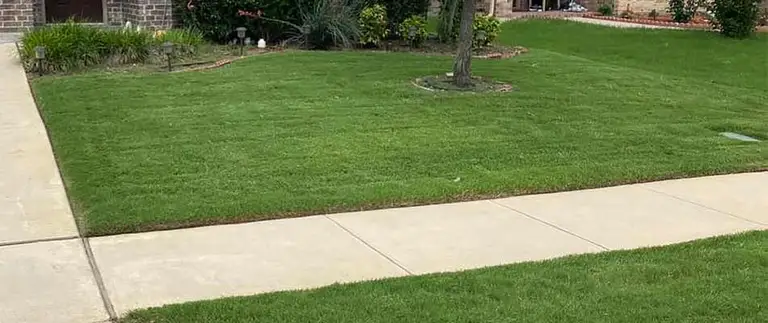
Bermuda is the most aggressive recovery grass in our region. In a healthy spring, scalped Bermuda greens up in two to three weeks, fills back to full coverage within four to six weeks, and is hitting peak density by early June. That is the baseline. If your June Bermuda is still showing visible thin patches, soil, or yellow areas, the lawn is communicating that something is off.
The diagnostic question is not whether scalping caused the patchiness. It almost never does on its own. The question is what condition the lawn was in before scalping that is now visible.
Cause One: Soil Compaction
The most common reason for thin June Bermuda is compacted soil. Bermuda’s lateral runners need to root into the soil to anchor and spread. Compacted clay does not let them do that. The runners grow across the surface but cannot establish, so the lawn looks thin even though there is plenty of grass overhead.
The screwdriver test confirms this in 30 seconds. If a long screwdriver pushed into the lawn after watering stops at two or three inches and you have to lean on it, your soil is compacted. The fix is core aeration, ideally this month or next while warm season grasses are still in their active growth window.
Cause Two: Fertility Gap
Bermuda is a nitrogen-hungry grass during green-up and early summer. Lawns that did not get a proper spring fertilization, or that got a generic product that did not match the soil’s actual needs, often show patchy thin coverage in June. The grass is alive but not producing the new runners it should.
The visual signs are pale color, slow growth between mowings, and visible soil between blades. A soil test resolves the question definitively, but most North Texas lawns at this point in the season benefit from a balanced summer fertilizer with moderate slow release nitrogen and supplemental potassium. The application should be made on the lower end of label rates because June heat is already setting in.
Cause Three: Lingering Damage From Last Year
Sometimes the patchiness you are seeing in June is damage from the previous summer or fall that never fully recovered. Chinch bug damage, grub damage, drought damage, brown patch outbreak, or shade-related thinning that you noticed in August can persist as thin areas all the way through the next spring. Scalping then exposed them in March, and they have not refilled because the underlying issue (or the resulting bare soil that is now weed-prone) is still present.
The diagnostic clue is location. If the thin patches are in the same spots they were last fall, you are looking at unresolved old damage rather than a new problem. Recovery for these areas usually requires a combination of weed control, light fertilization, deep watering, and sometimes sodding the worst spots.
Cause Four: Irrigation Coverage Gaps
If your patches form predictable shapes (long strips along sprinkler zone boundaries, corners that get less coverage, dry spots between heads), the cause is your irrigation system rather than the lawn itself. Bermuda needs roughly an inch of water per week to fill back in after scalping. Areas getting less than that are not going to recover until the coverage is corrected.
An afternoon spent running each zone and walking it usually identifies the problem heads. Look for misaligned heads, sunken rotors, blocked spray patterns, and corners where adjacent zones do not overlap. Small adjustments now save a lot of frustration through July and August.
What to Do This Month
Here is the recovery sequence we recommend for patchy June Bermuda.
Week one. Run the screwdriver test. If compaction is the issue, schedule core aeration this month. Walk each irrigation zone and identify any coverage gaps.
Week two. Apply a balanced summer fertilizer at moderate rates. Water it in within 24 hours. Adjust mowing height to two and a half to three inches for the summer. Mow more frequently (every five to seven days) to encourage lateral spreading.
Weeks three and four. Maintain deep infrequent watering (about an inch per week in one or two cycles). Spot treat any visible weeds in the thin areas before they get established. Watch for chinch bug or other pest activity that could be slowing recovery.
By week six, most properly managed Bermuda will have filled in 70 to 90 percent of the thin areas. The remaining 10 to 30 percent may need sodding or plugging if the underlying issue (severe shade, structural damage, dead patches with no runners) cannot be resolved.
When to Consider Sodding Instead of Waiting
Honest reality check. Some lawns will not fully recover this season through cultural practices alone, and the right move is to sod the worst patches in late June or early July while the temperatures are still warm enough for fast establishment. Bermuda sod laid in early summer roots in within two to three weeks and blends seamlessly with the surrounding lawn by August.
We typically recommend sodding when the affected area is large (more than 10 percent of the total lawn), when the bare areas are completely dead with no surviving runners, or when the cause is something that has not been resolved (heavy shade, drainage problems) and recovery from edges will be too slow.
Mowing Practices for June Recovery
Mowing height matters more than most homeowners realize during recovery. Cutting too short stresses the lawn and slows runner production. Cutting too tall reduces sunlight to the lower stems and slows lateral spreading.
For most common Bermuda varieties in residential lawns, the sweet spot during recovery is two and a half to three inches. For tighter elite Bermuda varieties (Tifway, TifGrand, hybrid blends used in newer subdivisions), one and a half to two inches works better. Either way, frequency matters: mow often enough that you never cut more than one third of the blade in a single pass.
What to Skip This Month
A few things make June Bermuda recovery harder, and they are common mistakes worth flagging.
Heavy nitrogen application. Pushing the lawn with high rates in June puts on soft growth that cannot handle July heat. Stick with moderate slow release rates.
Weed and feed combinations. The herbicide component often damages warm season grass under heat stress.
Daily light watering. Trains shallow roots that will fail in July. Stay on deep infrequent cycles even if the lawn looks tired.
Mowing too short. Tempting because the lawn looks ragged, but short mowing slows recovery and increases stress.
What to Do Next
If your Bermuda lawn is still patchy and you are not sure which cause applies, we will come walk it with you. We will run our own diagnostics, identify the underlying issue, and recommend the right combination of cultural and treatment work to get the lawn back to full coverage as fast as possible. June is not too late, but every additional week of delay reduces what is achievable this season.
Call us at (817) 799-6823 or visit buffalooutdoor.com to request your quote. As the fastest growing and highest rated outdoor services company in Tarrant County, with awards including Best of Fort Worth in 2022, 2024, and 2025, and Inc. 5000 recognition in 2023, we bring a level of expertise and accountability that is hard to match. Our 100% satisfaction guarantee means if we cannot make it right, you pay nothing. We serve homeowners across Keller, Aledo, Saginaw, Benbrook, Fort Worth, Southlake, Roanoke, Trophy Club, North Richland Hills, and communities throughout the area.