Short Answer: Drainage problems in Fort Worth area yards usually trace back to one of four causes: heavy clay soil that drains slowly, improper grading away from the house, downspouts that dump too close to the foundation, or compacted areas that block water flow. Real fixes range from simple regrading and downspout extensions ($200 to $800) to French drains ($15 to $30 per linear foot) to full property regrading ($3,000 to $10,000+). Here is how to identify which fix you actually need before spending money on the wrong one.
If your yard puddles every time it rains, has soggy spots that never fully dry out, or is sending water toward your foundation, you have a drainage problem. North Texas clay soils combined with heavy rain events make drainage one of the most common issues we deal with on Fort Worth, Keller, Aledo, and Benbrook properties.
The frustrating part is that drainage solutions can range from simple to expensive, and getting the wrong recommendation can mean spending a lot on something that does not actually solve the problem. Let us walk through how to think about this.
The Four Most Common Causes
Heavy clay soil is the foundation of most drainage issues in our area. Fort Worth area soils are dominated by Houston Black and Heiden clay series, which can take 24 hours or more to drain a heavy rain. When it rains again before the previous water has soaked in, you get standing water.
Improper grading is the second cause. Yards that slope toward the house, that have flat sections without enough fall, or that have settled over time often end up holding water. Grade should fall at least 6 inches in the first 10 feet away from the foundation, but most older properties do not meet that standard anymore.
Downspouts dumping too close to the foundation is the third cause. A 1-inch rain on a 1,000-square-foot roof produces about 600 gallons of water. If your downspouts dump at the splash block, that water has to soak into already-saturated clay or run off into your lawn.
Compacted areas form the fourth cause. Foot traffic, parked cars, equipment storage, or even heavy mowers compact the soil over time. Compacted clay essentially does not drain at all, so any water in those areas just sits.
Multiple causes typically work together. A property with heavy clay, a downspout dumping at the foundation, and a slight slope toward the house can have drainage issues that only show up during heavy rain events but produce real damage over time. Diagnosis means looking at all four causes and understanding how they interact, not just identifying one.
How We Diagnose the Real Problem
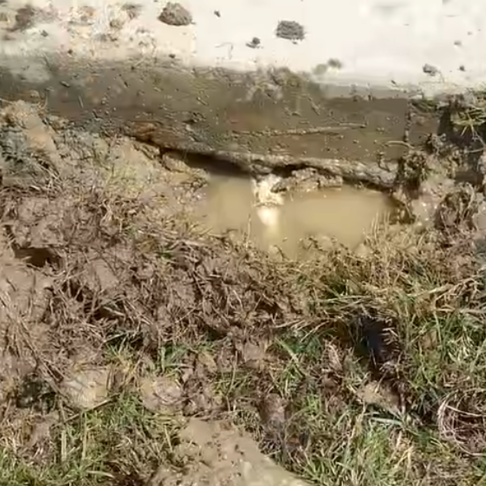
The first thing we do on a drainage call is walk the property during or right after a rain. Standing water tells the story. Where does it pool? How long does it stay? Is it near the house or away from it? Are there visible flow paths in the lawn?
We also check the grade with a level around the foundation, look at downspout positioning, and probe the soil at trouble spots to see how compacted it is. Different combinations of these symptoms point to different solutions.
Other diagnostic indicators include the type of vegetation growing in problem areas (water-loving plants like sedges thriving in soggy spots), discoloration on the foundation suggesting recurring water contact, and damage to plantings near the house that have been receiving too much water from poorly directed drainage.
The Inexpensive Fixes That Sometimes Solve It
Before recommending a major project, we always look at whether simpler interventions might solve the problem.
Downspout extensions that move water 8 to 10 feet from the foundation can fix a surprising amount of drainage issue, costing $50 to $200 per downspout. If your downspouts dump at the splash block and you have wet zones immediately downhill, this is the first thing to try.
Spot regrading on small problem areas (filling a low spot or shaping a swale to redirect flow) can run $200 to $800 depending on scope. This works when you have one or two specific puddles rather than systemic grading issues.
Aeration in spring and fall reduces compaction over time and improves how clay soils absorb water. It is not a cure for drainage by itself, but it helps every other intervention work better.
Soil amendments can also help over time. Working compost or expanded shale into clay soils gradually improves structure and drainage. This is a multi-year project rather than a quick fix, but it transforms heavy clay into more workable soil that drains better and supports healthier turf.
Re-establishing damaged turf in low-flow areas is another sometimes-overlooked fix. Bare patches catch and hold more water than dense turf. Restoring healthy grass cover on problem areas reduces standing water on its own.
French Drains and When They Make Sense
A French drain is a perforated pipe in a gravel-filled trench that collects subsurface water and carries it to a discharge point. They are the right answer when you have wet zones that need actual subsurface drainage, particularly along the back of a property where water collects from upslope.
Real costs in our area run $15 to $30 per linear foot, depending on depth, soil conditions, and how the discharge is handled. A typical French drain installation might run $1,500 to $4,000 for a 100-foot run.
Where French drains fail is when they are installed without proper depth, without a real discharge plan, or when the actual problem is grading rather than subsurface water. We see plenty of yards where someone installed a French drain that did not solve the problem because the issue was up-grade water flow, not water in the soil.
Discharge planning is the most overlooked aspect of French drain installation. The drain has to terminate somewhere that can actually accept the water (street curb, rain garden, dry well, daylight on a downslope). Drains that terminate without proper discharge often back up over time and become useless. Companies that quote French drains without discussing the discharge are not designing real solutions.
Major Regrading and Drainage Projects
Some properties need full regrading or a comprehensive drainage system. This is the right answer when grading is fundamentally wrong (water flowing toward the house, large flat areas with no fall) or when multiple problem zones interact.
Costs for major projects range from $3,000 to $10,000 or more depending on scope. They typically involve heavy equipment, soil import or export, and integrating drains, swales, and grading into a complete system.
This is where getting multiple opinions matters. The right answer for a complex drainage problem often is not obvious, and a contractor who jumps straight to the largest scope without exploring smaller fixes is often selling more than you need.
Permits may be required for major drainage work depending on jurisdiction and scope. Discharge into city storm systems often requires permits and may have specific requirements about flow rates and water quality. Reputable companies handle the permit process or coordinate with the homeowner.
Foundation Concerns
Drainage problems matter most when they affect the foundation. Standing water near the slab, water flowing toward the house, or persistent moisture in the soil right next to the foundation can lead to expensive structural problems over time.
If your drainage issue is touching the foundation in any way, it is the highest priority to address. We work alongside foundation specialists when needed and can usually identify whether structural concerns exist before recommending a drainage scope.
What Drainage Cannot Fix
Some yard problems get blamed on drainage but actually have other causes:
Lawn diseases that thrive in moist conditions look like drainage problems but are actually disease problems. Fixing drainage helps, but the disease still needs treatment.
Mosquito breeding can occur in tiny amounts of standing water that drainage projects cannot fully eliminate. A combination of drainage improvement and mosquito control often produces better results than either alone.
Grass that will not grow in shaded areas is sometimes blamed on drainage when the actual problem is insufficient sunlight. Drainage fixes will not produce grass in deep shade.
What to Do Next
If your Fort Worth area yard has drainage issues you have been putting off, the first step is a real diagnosis, ideally during or right after a rain so the problem is visible. Reach out and we will walk the property, identify the actual cause, and lay out your options at every price point. We would rather recommend the right small fix than oversell you on a big project.