Short Answer: Effective fire ant control on a Fort Worth area property uses a combination of broadcast bait applied 2 to 3 times per year and targeted mound treatments for visible mounds. Annual program costs typically range from $250 to $500 for a residential property, with one-time mound treatments running $50 to $100. DIY options work for small infestations but rarely keep up with active mound pressure. Here is a clear breakdown of what each approach costs and what to expect.
Fire ants are one of those problems where the cost of doing nothing is much higher than the cost of treatment. A single sting can be painful for hours. A child or pet stepping on a mound can produce dozens of stings in seconds. And once fire ants are established on a property, they spread quickly and aggressively if not addressed.
Across Fort Worth, Keller, Aledo, and Benbrook, fire ants are a year-round reality. The question is not whether you will see them, but how to keep them under control without overspending or under-treating. Let us walk through your options.
Why Fire Ants Are So Hard to Eliminate
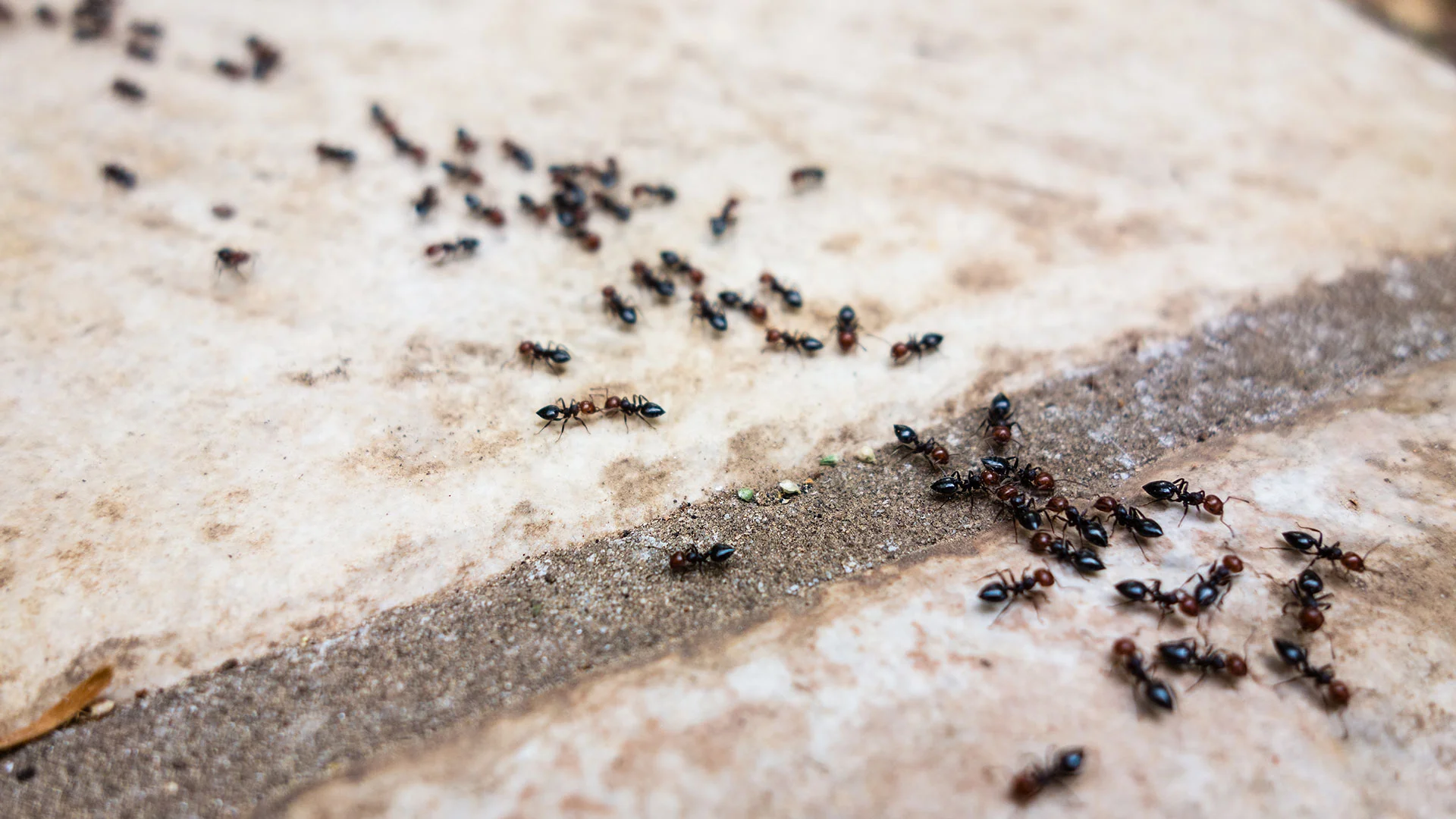
Fire ants are a nightmare from a control perspective because of how their colonies work. A typical mound contains 100,000 to 250,000 individual ants, and the queen (or queens) producing all the eggs lives deep underground, often three feet or more below the surface.
Surface treatments that kill the workers you can see do not reach the queen. The colony recovers within weeks. To actually eliminate a colony, you have to either treat the queen directly with a long-acting bait that workers carry down to her, or saturate the entire mound with enough chemical to reach all the way down.
Anything less than that just kills the visible workers and gives you a few days of relief.
Multi-queen colonies (called polygyne fire ants) make the problem even harder. A single property can host dozens of interconnected mounds with multiple queens. Treating one mound while leaving the others does almost nothing to overall population. The Texas A&M AgriLife research is clear that broadcast approaches consistently outperform mound-by-mound treatment for any meaningful infestation.
Broadcast Bait: The Foundation of a Real Program
The most cost-effective fire ant control on a residential property is a broadcast bait application. We spread a small amount of granular bait across the entire property using a calibrated spreader. Workers find the bait, carry it back to the colony, and feed it to other ants including the queen. The queen dies, the colony fails, and over the next 2 to 4 weeks, mounds disappear.
Broadcast bait works on colonies you have not even noticed yet, which is the real advantage. By the time you see a mound, the colony has been there for weeks or months. Bait gets to colonies before they become surface problems.
We typically recommend 2 broadcast applications per year, one in spring and one in late summer or early fall. Cost runs roughly $125 to $200 per application depending on lot size, so $250 to $400 for the full annual program.
Application timing matters. Bait works best when soil temperatures are warm enough for ants to be foraging actively (typically 60 to 90 degrees) and the lawn is dry. We avoid applications immediately before rain or during the heat of midday. Most professional services schedule routes around weather forecasts to optimize bait performance.
Mound Treatments for Visible Problems
If you are dealing with a specific mound (especially one near a play area, doorway, or anywhere that creates risk), mound treatment gives you immediate results. A drench application uses a liquid insecticide poured directly into the mound, saturating down to where the queen lives. Effective treatments kill the entire colony within a few days.
Mound treatments cost $50 to $100 for a small residential job, more for larger properties or many mounds. They are a good complement to broadcast bait but not a substitute. If you only treat visible mounds, the unseen colonies elsewhere on the property will keep producing new mounds indefinitely.
One important consideration: do not disturb a mound before treating it. Disturbed mounds often relocate, with the queen moved to a new spot before treatment can reach her. Apply the drench gently to the surface and let it soak down rather than stirring or stomping the mound first.
DIY Options That Work (And Don’t)
Several DIY approaches work, and several do not.
Boiling water poured on a mound can kill some workers but rarely reaches the queen. Effectiveness is maybe 60 percent at killing the colony, and you need to use 3 to 5 gallons per mound for it to even have a chance.
Granular contact killers from the hardware store kill the workers you spread them on but do not reach the queen. Mound looks dead, then comes back in two weeks.
DIY bait products containing the same active ingredients as professional bait can work if you apply them correctly and patiently. The catch is that bait needs fresh, dry conditions and proper coverage. Most homeowners apply too much, too little, at the wrong time, or with too much variation. Results are inconsistent.
Various home remedies (grits, club soda, gasoline) have a long history of internet popularity and a poor history of actually working. Some are also dangerous or environmentally damaging.
The grits myth particularly persists despite being thoroughly debunked. The theory was that worker ants would carry grits to the queen, who would eat them and burst when they swelled with moisture. Researchers have shown that fire ants do not actually consume solid food. Workers feed only on liquid food shared from larvae through trophallaxis. Grits do nothing.
What a Real Program Costs Annually
A typical Fort Worth area residential property on a complete fire ant program looks like this: 2 broadcast bait applications per year ($250 to $400 total), plus 2 to 4 mound treatments through the season as needed ($100 to $300). Total annual cost: $350 to $700, depending on property size and pressure.
Compared to ongoing DIY effort that produces inconsistent results, most customers tell us the professional program saves them time, money on wasted products, and a lot of frustration.
Special Considerations
Properties with kids, pets, or people with allergies are higher priority. We recommend treating before May or June, when fire ants become most active, rather than reacting after a sting incident.
Properties next to undeveloped land, creek banks, or unmaintained neighbors face higher pressure and may need more frequent treatments. Fire ants are mobile and re-invade from adjacent properties constantly.
If you are seeing mounds inside a fenced area where they were not before, or in spots that should have been treated, that usually points to a coverage gap. We adjust accordingly.
Health Considerations
Fire ant stings cause more than just discomfort. About 1 percent of stung people experience severe allergic reactions, and a small number experience anaphylaxis that can be life-threatening. Properties with anyone in the household who has shown reactions to insect stings should be treated proactively rather than reactively.
Pets are also at risk. Dogs investigating mounds can receive dozens of stings to the muzzle and paws. The reactions can include swelling, infection at sting sites, and in rare cases shock. Properties with dogs that spend significant time outside benefit from aggressive control.
If a sting incident does happen, the recommended response is to wash the area with soap and water, apply a cold pack, and watch for signs of severe reaction. Seek medical attention immediately for swelling beyond the sting site, breathing difficulty, or any sign of allergic reaction.
What Disturbance Does
One question that comes up often: does mowing over fire ant mounds spread them? The short answer is that mowing over mounds disturbs the colony but does not spread it. Workers and brood are visible briefly after disturbance, but the colony stays in place. The queen, deep underground, is unaffected by surface disturbance. Mowing is fine; the only consideration is keeping the mower deck height appropriate so it does not damage the mower.
What to Do Next
If fire ants are an issue on your Fort Worth area property and you are tired of fighting them piecemeal, we are glad to put together a quote. We will walk the property, count active mounds, look at neighboring conditions, and recommend a program that fits the actual pressure you are dealing with. Reach out anytime.