Short Answer: Chinch bugs feed on grass blades from above the soil and create irregular brown patches in the sunniest, hottest parts of the lawn, usually starting in May or June. Grub worms feed on grass roots from below and cause spongy, easily-lifted areas that may be pulled up by birds, raccoons, or skunks digging for them. The two are confused often, but the treatments are completely different. Here is how to tell which one is on your Fort Worth area lawn.
If you are seeing dead patches in your lawn and you know it is not a watering or disease problem, you are probably dealing with one of two common North Texas pests: chinch bugs or grub worms. Both can damage a lawn quickly, both create brown areas, and both get blamed for each other’s damage all the time.
Treating the wrong one wastes money and lets the real culprit keep going. So let us walk through how we tell them apart on Fort Worth, Keller, Aledo, and Benbrook properties.
Where the Damage Shows Up
Chinch bugs love heat. They almost always start in the sunniest, hottest part of the yard, often along driveways, sidewalks, or south-facing exposures. The damage spreads outward from those hot spots in irregular patches.
Grub damage is more random. Grubs distribute themselves across the soil based on where the parent beetles laid eggs the prior fall, so you might see scattered dead spots throughout the yard rather than one expanding zone. The spots also tend to follow the irrigation pattern, since beetles prefer moist soil for egg-laying.
The seasonal timing also differs. Chinch bug damage builds through the heat of summer, peaking in July and August. Grub damage often shows up in late summer or early fall, after grubs have grown large enough to consume significant root material. Properties that see damage in May or June are more likely chinch bugs. Damage that appears in September or October is more likely grubs.
What the Damage Looks Like
Chinch bug damage looks like the grass simply dried out and died, even when the lawn is being watered. The blades stay attached and intact for a while. The pattern often has a yellow halo at the active edge as the bugs work outward.
Grub damage feels different to the touch. If you grab the affected grass and tug, large sections often lift up like a loose carpet because the roots have been chewed off. You can also see dirt or tunneling underneath. If birds, skunks, or raccoons have been digging up your lawn, that is an almost certain grub indicator.
The texture of the damaged grass also tells you which pest. Chinch-bug-killed blades stay relatively rigid and intact for weeks because only the leaf tissue was attacked. Grub-killed grass goes mushy at the base because the roots and crowns have been destroyed. Walking across grub-damaged areas can feel spongy underfoot.
Confirming What You Have
The best way to confirm chinch bugs is the float test or a visual inspection at the edge of a brown patch. Cut the bottom out of a coffee can, push it a couple of inches into the soil at the active edge, and fill with water. Chinch bugs will float to the surface within a few minutes. Alternatively, just part the grass blades at the edge of a patch and look closely. Adult chinch bugs are tiny (about an eighth of an inch) and black with white wing markings.
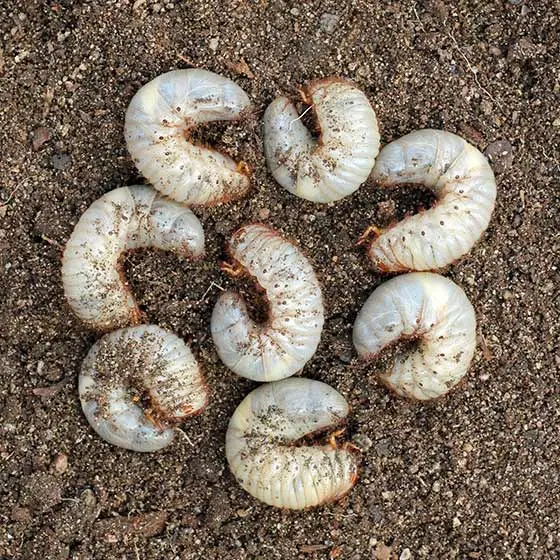
Grubs you find by digging. Cut a 6-inch square of turf about 3 inches deep at the edge of an affected area and look at the soil. White, C-shaped larvae are grubs. Five or more per square foot is generally treatment threshold.
The soap flush test confirms chinch bugs without digging. Mix 2 tablespoons of dish soap into a gallon of water and pour it over a one-foot square area at the boundary between green and yellowing grass. Within a few minutes, chinch bugs will surface. Counts of 10 or more in that square indicate an active infestation that needs treatment. The same test can also reveal sod webworm caterpillars, which sometimes get confused with both grubs and chinch bugs.
How Each One Is Treated
Chinch bugs respond to a properly applied insecticide labeled for chinch bug control. Application timing matters: we treat at the active edge of the damaged area to stop the spread. One properly timed application usually controls the population for the season.
Grubs are treated with a different category of insecticide, applied to the soil and watered in to reach the larvae below the surface. Timing is also critical. The most effective window is when grubs are young and feeding actively, typically late summer in our area. Applying in spring on mature grubs gives much weaker control.
Notice the timing difference: peak chinch bug season is late spring and summer. Peak grub treatment season is late summer when newly hatched grubs are vulnerable. Treating one with the other’s product or timing is a common mistake we correct.
Coverage matters as much as product choice. Chinch bug treatments need to reach the bugs at the soil surface, so the lawn should be slightly moist but not soaked at application. Grub treatments need to penetrate to the grub feeding zone several inches below the surface, which requires watering in the product to carry it down. Reading and following the label specifically for each pest is essential.
Recovery After Treatment
Chinch bug damage often recovers without reseeding if treated early. The grass blades may be dead but the crowns are usually still alive, so the lawn fills back in once the bugs are gone.
Grub damage frequently requires reseeding or sodding. The roots are gone, so even if the grub population is eliminated, the dead areas will not recover on their own. Most of our customers see better results when we combine grub treatment with light overseeding for cool-season blends or plugging for St. Augustine.
Preventing Both Going Forward
For chinch bugs, preventative spring applications work well in lawns with a history of damage. We also recommend addressing thatch buildup, which gives chinch bugs hiding places. A healthy, properly mowed lawn handles low chinch populations without visible damage.
For grubs, preventative late-summer applications timed to the egg-laying window is the most cost-effective approach. Beetle populations vary year to year, so on properties without a grub history, we monitor rather than treat preventatively.
Other Pests That Get Confused With These Two
A few other lawn pests produce somewhat similar damage patterns and get misdiagnosed:
Sod webworms produce ragged irregular brown patches with chewed grass blades. The damage looks similar to chinch bugs but the cause is caterpillar feeding rather than insect piercing. Treatment uses different active ingredients.
Armyworms produce expanding brown areas as they march across the lawn feeding. They can take down significant lawn area within days during outbreak years.
Mole crickets damage the soil structure as they tunnel, producing soft spongy areas that look similar to grub damage. They are less common in the Fort Worth area than further south but do occur.
Fire ant mounds kill grass directly under the mound but rarely produce widespread damage patterns. They are easily identified by visible mounds and ant activity.
Why DIY Often Falls Short
Both pests are within reach of capable DIY homeowners with the right products and timing. The challenges that catch most people are diagnostic accuracy and product selection. Treating chinch bug damage with grub control products does nothing because the active ingredients target different life stages and feeding behaviors. Spot treating only the visibly damaged area lets the pest continue spreading in surrounding apparently-healthy grass.
Most retail insecticides are weaker formulations than commercial products and require multiple applications to achieve what a single professional treatment accomplishes. The math on DIY versus professional usually comes out closer than homeowners expect once products, equipment, and time are factored in.
What to Do Next
If you have damage in your Fort Worth area lawn and you are not sure what is causing it, we are glad to come diagnose it. We will check for both pests, confirm which one (or whether it is something else entirely), and put together a treatment plan that actually solves what you are seeing. Reach out anytime.