Short Answer: When St. Augustine grass turns brown in Fort Worth, the cause is almost always one of five things: take-all root rot, chinch bug damage, drought or watering issues, brown patch fungus, or compaction and shade stress. Each shows up a little differently, and the fix is completely different depending on what you are dealing with. Here is how to read what your lawn is telling you.
If you are looking at brown spots in your St. Augustine right now and trying to figure out what is going on, you are in good company. Across Fort Worth, Keller, Aledo, and Benbrook, browning St. Augustine is one of the most common calls we get from late spring through summer.
The frustrating part is that brown grass can mean a half-dozen different things, and a lot of the advice online treats them all the same. So you end up watering more when watering is making it worse, or treating for fungus when the real problem is bugs. Let us walk through what we actually look for when we diagnose a browning St. Augustine lawn.
Cause 1: Take-All Root Rot
Take-all root rot is one of the most common diseases we see in North Texas St. Augustine, and it is easy to mistake for drought. The grass looks yellow first, then thins, then browns out in irregular patches that gradually expand. The blades pull up easily because the root system is being destroyed.
The disease thrives in compacted, alkaline soils with poor drainage. That description fits a lot of Fort Worth area yards. Treatment requires a fungicide program timed to specific soil temperatures, plus addressing the underlying soil chemistry. Watering more makes it worse, which is why so many homeowners accidentally accelerate the damage.
The diagnostic test for take-all is the pull test. Healthy St. Augustine pulls up only with significant force, taking soil and roots with it. Take-all damaged grass slides out of the soil with the roots already gone. If you can grab a handful and lift it cleanly with no resistance, that is a strong indicator. Recovery from take-all is slow, often a multi-year process of soil correction combined with fungicide treatment.
Cause 2: Chinch Bug Damage
Chinch bugs are tiny, almost invisible insects that pierce St. Augustine blades and inject a toxin that kills the grass. The damage looks like irregular brown patches, often starting in the sunniest, hottest part of the yard, that expand outward.
If you part the grass at the edge of a brown patch and see small black or red bugs running along the soil surface, that is chinch bug confirmation. They typically show up in May or June in our area and can take down a lawn fast if left untreated.
The soap flush test confirms chinch bugs when you cannot see them directly. Mix 2 tablespoons of dish soap into a gallon of water and pour it over a one-foot square area at the boundary between green and yellowing grass. Within minutes, chinch bugs will surface. Counts of 10 or more per square indicate an active infestation that needs treatment. Chinch bugs prefer hot dry conditions, so fall watering practices that keep the lawn slightly drier than usual can amplify damage if a population is already established.
Cause 3: Drought or Watering Issues
St. Augustine needs about an inch of water per week to stay green through Texas heat. The catch is that how you water matters as much as how much. Frequent shallow watering trains the roots to stay near the surface, where they bake in summer. Deep, less frequent watering pushes roots down where the soil stays cooler.
If you have brown patches that get worse on slopes, near walls, or at the corners of your irrigation zones, the cause is usually uneven coverage. A 10-minute audit of your sprinkler system in the early morning will show you the gaps.
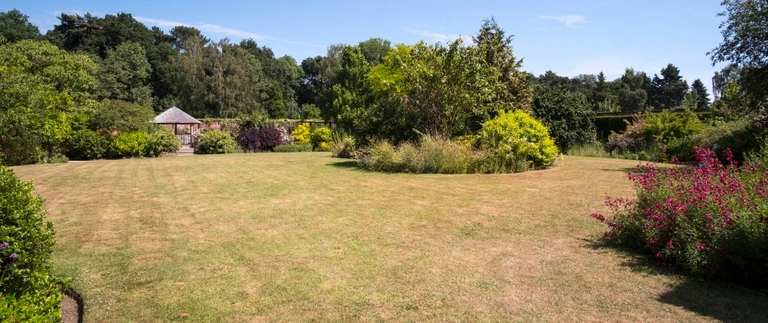
Visual signs of drought stress are distinctive once you know them. Footprints that stay visible for hours after walking on the lawn indicate the grass cannot rebound from the pressure because it is moisture-stressed. A gray-blue cast on the blades is another early sign. Drought-stressed grass also folds the blades inward to reduce surface area, while well-watered grass holds blades flat.
Cause 4: Brown Patch Fungus
Brown patch shows up as circular brown areas that often have a gray or smoky ring at the edge. It loves humid weather, especially when night temperatures stay above 65 and the lawn stays wet overnight.
Watering at night, watering too often, or extended rainy periods all favor brown patch development. The fix is a targeted fungicide combined with adjusting watering to mornings only and improving air circulation.
The active edge of brown patch shows visible mycelium (a fine web-like film) on grass blades during dewy mornings. This is the most reliable visual confirmation. Treatment timing matters substantially: fungicide applied during active spread stops further damage but does not undo what is already done. Catching the disease before patches reach a foot in diameter dramatically reduces total damage.
Cause 5: Compaction and Shade Stress
St. Augustine handles partial shade better than other warm-season grasses, but it still needs at least 4 to 5 hours of direct sun per day. Yards with mature trees, north-facing exposures, or areas that have lost grass to expanding tree canopies often show progressive thinning that ends in brown bare spots.
Compaction adds insult to injury. Foot traffic, parked cars, or playsets compress the soil and starve the roots of oxygen. The grass thins, weeds move in, and the bare areas expand. Aeration plus selective tree thinning is often what brings these areas back.
For yards where shade has progressed beyond what St. Augustine can handle, the honest answer is sometimes that grass is not the right ground cover for that area. Switching to mulched beds, ground cover plantings, or hardscape produces a better-looking and lower-maintenance result than continuing to fight the conditions.
How to Tell Which One You Have
The biggest clue is how the brown is shaped and how it spreads. Take-all looks irregular, expands gradually, and the grass pulls up easily. Chinch bug damage starts in the hottest spots and you can find the bugs if you look. Drought stress browns evenly across exposed areas. Brown patch is circular with a ring. Compaction and shade browning happens in the same predictable spots year after year.
If you are not sure, that is exactly what a professional diagnosis is for. Treating the wrong cause is wasted money and lost time.
Multiple causes often happen at once, which makes diagnosis trickier. A heat-stressed lawn with marginal watering can develop both chinch bugs and brown patch in the same season. A property with compaction issues can also have take-all developing underneath. The combination problems are why we walk the property thoroughly rather than diagnose from a single visible patch.
Recovery Timelines
How long it takes a brown St. Augustine lawn to recover depends entirely on what caused the damage and whether crowns survived:
Drought damage with crowns intact: 2 to 4 weeks of proper watering brings color back.
Brown patch with proper treatment: active edge stops within 7 to 10 days; visible recovery 4 to 6 weeks.
Chinch bug damage with proper treatment: spread stops within days; recovery 4 to 8 weeks.
Take-all root rot: a multi-year process; visible improvement 3 to 6 months after starting treatment.
Compaction and shade damage: depends on whether underlying conditions can be corrected; often a multi-season project.
Prevention for Next Year
Most of these problems can be reduced or eliminated through proactive year-round care. The lawns we manage that consistently stay green through Texas summers share several practices:
Soil testing every 18 to 24 months. Knowing pH and nutrient levels means treatments target actual problems rather than guessing.
Annual core aeration to address compaction before it causes visible damage.
Deep infrequent morning watering. The single biggest practice change for most homeowners.
Balanced fertility programs that avoid excess nitrogen during summer heat.
Preventative chinch bug applications on properties with infestation history.
Mowing at 3.5 to 4 inches to support root depth and reduce stress.
The cumulative effect of these practices is a lawn that handles each summer with progressively less drama.
What to Do Next
If your St. Augustine is browning in Fort Worth, Keller, Aledo, or Benbrook, we are glad to come walk it with you. We will identify what you are dealing with, pull a few sample blades and look at the roots, and tell you honestly what would actually solve it. Most of these issues are very treatable when caught early. Reach out and we will get you on the schedule.